
If you landed here looking for how to keep blueberries fresh at home — the short answer is store them unwashed in a ventilated container in the fridge, and they'll stay firm for 7–10 days. That's the best container for blueberries at home: dry, cold, and with airflow.
But if you're a grower, distributor, or packaging buyer asking which material — PLA or PET — actually performs better across a commercial blueberry supply chain, that's a different question. That's what this guide covers.
Here's what we tell every buyer who asks us: it depends on your distribution route, not just your sustainability goals. We've seen both materials work well. We've seen both fail. And almost every time a switch goes wrong, it's not because the buyer chose the wrong material — it's because they chose based on the wrong criteria.
Quick Decision Guide: PLA or PET for Your Blueberry Supply Chain?
| Your Situation | Better Choice | Why |
|---|---|---|
| Local retail supply (under 5 days) | PLA | Compostability + freshness control |
| Export cold chain (7–14 days) | PLA after validation | Requires WVTR, stacking test |
| Hot climate logistics | PET | Better heat resistance |
| Limited composting infrastructure | rPET/PET | Easier recycling route |
| EU sustainable packaging projects | PLA | EN13432 & PPWR alignment |
Gas permeability and atmosphere control
This is where we consistently see PLA outperform PET for blueberries specifically.
PLA film's lower gas permeability allows blueberries to naturally accumulate the CO₂ they exhale during respiration. The result is a high-CO₂, low-O₂ microenvironment inside the container — a modified atmosphere that suppresses fungal growth, particularly Botrytis cinerea, without any active gas injection.
Conventional PET clamshells with open ventilation holes cannot replicate this effect. The ventilation design that makes PET perform well for some produce categories works against blueberries by allowing the CO₂ that suppresses mold to escape.
In our cold-chain trials running over 52 days, blueberries in optimized PLA containers showed a defect rate of just 2.87% and a weight loss rate of 0.92% — compared to 13.69% and 8.43% in the control group with no protective packaging. Consumer sensory evaluations also showed higher overall acceptability scores for PLA-packaged blueberries. The higher-humidity environment doesn't compromise eating quality — it protects it.

Why the PLA vs PET Question Is More Complex Than It Looks
Most comparisons frame this as a sustainability trade-off: PLA is compostable, PET is not. In our experience, that framing misses the point for commercial blueberry operations.
The real question is which material keeps your fruit arriving sellable, at what cost, and under what supply chain conditions.
A compostable PLA clamshell that deforms at an ambient consolidation point costs you more than a PET container that doesn't. A PET-vented clamshell that accelerates weight loss over a 10-day cold chain costs you more than a PLA container that doesn't. The material choice is a performance decision first and a compliance decision second.
How PLA and PET Differ — The Properties That Matter for Blueberries
Water vapor transmission rate (WVTR)
Moisture management works in both directions, and this is something we check on every container spec we review.
Too little vapor transmission and condensation pools inside the container, accelerating mold. Too much and your blueberries lose weight faster than they should, arriving undersized and soft at the receiving dock.
PET's WVTR characteristics are well-established and consistent across suppliers. PLA's WVTR varies more by container structure and perforation design — which means when you switch to PLA, the spec matters more, not less.
Our advice: request WVTR test data measured under cold chain humidity conditions (85–95% RH), not ambient lab conditions. The difference in results is significant, and it's one of the most common gaps we see in supplier documentation.
Thermal tolerance
This is PLA's primary limitation, and it's one we're always upfront about with buyers.
PLA starts softening above approximately 55°C.
For most refrigerated blueberry routes:
✔ 0–4°C cold chain
✔ supermarket distribution
✔ refrigerated storage
PLA usually performs reliably. However, check carefully if your route includes:
summer loading areas
unrefrigerated transport
warm-climate ports
In these cases, PET may reduce risk.
Structural performance under cold chain stacking
Both materials handle standard stacking loads adequately. The difference shows up under sustained cold, humid conditions over 7–14 days — the scenario that matters for refrigerated sea freight.
Biodegradable PLA clamshell can soften slightly under these conditions in ways that aren't always visible until a pallet is unstacked at the destination. When buyers come to us for export specs, we always ask for stacking load data generated under cold chain simulation conditions (0–4°C, 85–95% RH), not room-temperature crush resistance testing. If your supplier can't provide that, it's a gap worth flagging before your season begins.
Side-by-Side Comparison
|
Consideration |
PLA |
PET |
| Modified atmosphere for blueberries | ✅ Natural CO₂ accumulation | ❌ Vented design releases CO₂ |
| Weight loss rate | Lower | Higher |
| Mold suppression | Better under consistent cold chain | It depends on ventilation specs. |
| Thermal tolerance | Softens above 55°C | No limitation in standard supply chains |
| Compostability certification | EN 13432, ASTM D6400 | Not compostable |
| Clarity | Comparable to PET | High |
| Cost | 10–40% premium over PET | Lower base cost |
| Retailer sustainability compliance | Growing requirements in EU, North America | Faces pressure under PPWR 2028 |

Which Is Better for Your Distribution Route
There's no universal answer here. What we do at YiTo Pack is match the spec to the route—not to the regulation and not to what's trending.
Local and regional (under 5 days)
PLA fruit punnet is typically the stronger choice. Cold chain exposure is brief enough that thermal tolerance isn't a risk factor, and PLA's atmosphere control advantage works in your favor. If your buyers are in farm-direct or specialty grocery channels, the compostability credential also functions as a genuine point-of-difference at retail — not just a compliance checkbox.
Export and long-haul cold chain (7–14 days)
Compostable PLA clamshell can still perform well here, but only with route validation. You need confirmed OTR/CTR data, WVTR performance validated under cold chain humidity (85–95% RH), and stacking load data from cold chain simulation at 0–4°C. If your route includes unrefrigerated transit legs, we'll work with you to identify whether a higher-specification PLA structure covers that exposure point—or whether a different material is the more practical path.
Markets with limited composting infrastructure
If your primary goal is practical material recovery rather than compliance positioning, a recyclable option may be more pragmatic. One alternative is rPET—recycled PET. It's important to clarify here: rPET is a recyclable material, not a biodegradable or compostable one. It does not carry EN 13432 or ASTM D6400 certification. For buyers whose retail compliance requires compostability claims, rPET does not qualify. But for markets where composting infrastructure is limited and recycled content is the relevant sustainability metric, it offers the performance characteristics of standard PET—stacking strength, temperature tolerance, and established sealing compatibility — while supporting recycled content claims that satisfy an increasing number of retailer sustainability scorecards.
The Total Cost of Switching from PET to PLA
Per-unit price isn't the whole number, and we always walk buyers through the full picture before they commit.
PLA fruit container currently carries a 20–40% premium over standard PET punnet at comparable specifications. That gap narrows at higher annual volumes. But the complete switching cost also includes:
· Certification documentation for your specific container structure
· Retailer approval cycles for new packaging specs
· Sealing equipment recalibration—PLA has a different heat-seal window than PET, and some equipment needs adjusting
· Compostable Fruit Label and film alignment—a compostable PLA clamshell paired with a conventional PE label cannot make a compostability claim and may be flagged in retail sustainability audits
For buyers supplying EU retail, the regulatory trajectory also matters. PET faces increasing compliance pressure under PPWR 2028. Buyers who make the switch now are building compliance infrastructure ahead of a deadline — not paying a premium for no return.

What We Verify Before Recommending Either Material
The most common mistake we see in the PLA vs PET decision is treating it as a material question when it's actually a system question.
Before we recommend either spec to a buyer, we confirm:
- · OTR and WVTR test reports for the specific container structure, not just the base material
- · Stacking load data generated under cold chain simulation conditions at 0–4°C and 85–95% RH
- · Sealing film and label compatibility for the full packaging system
- · Cold chain simulation test data covering the full 7–14 day range for export routes
If you're switching from PET to PLA, we strongly recommend running a structured pilot through your actual distribution route before the season begins. Track defect rate at destination, weight loss rate, container integrity, and condensation behavior at each transition point. That data is what separates a reliable spec from one that looks right on paper.
How YiTo Pack Approaches Biodegradable Blueberry Container Design
At YiTo Pack, our design logic for biodegradable blueberry containers starts with three variables in sequence: material selection, ventilation architecture, and structural performance under cold chain conditions. All three need to be optimized together — a strong material choice with poor ventilation design or excellent gas exchange with inadequate stacking strength produces a container that fails at the distribution stage regardless of what the lab data shows.
If you want to see how this plays out in practice, our guide on How to Keep Blueberries Fresh in Biodegradable Packaging walks through the full validation process.
Certifications That Support Your Market Access
Getting the container spec right is one part of the equation. Having the documentation to back it up at a retail audit is the other—and it's the part that most often gets left to the last minute.
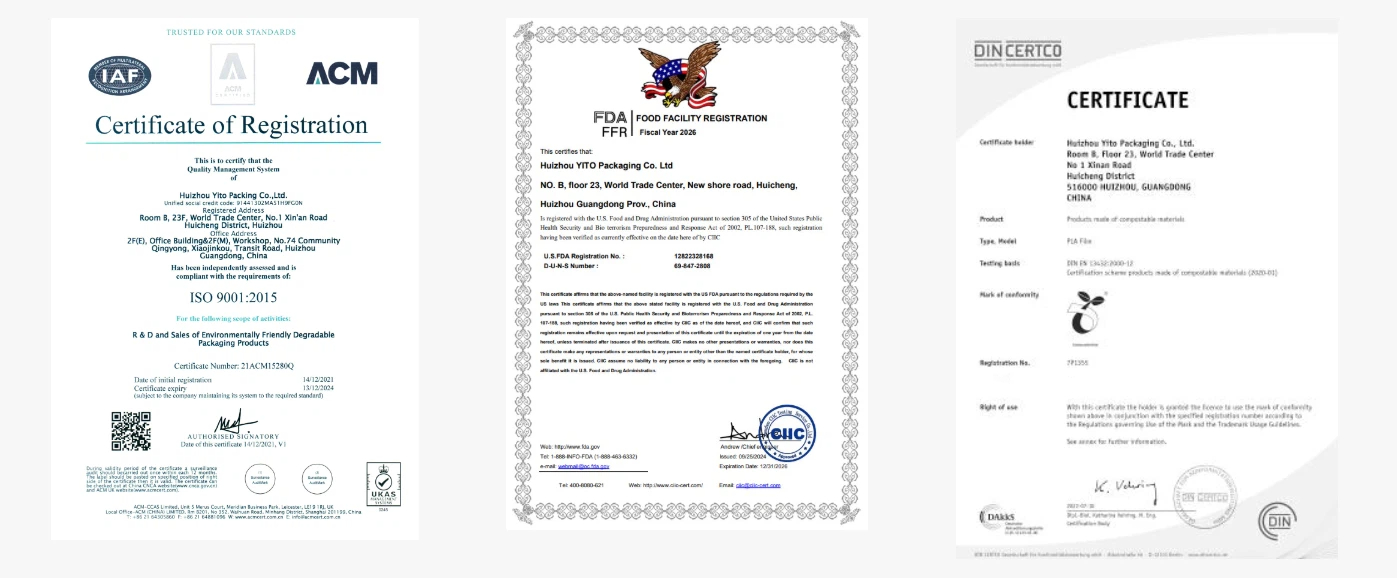
The certifications we hold for our blueberry container structures cover the requirements we see most often across the markets our buyers supply:
EN 13432 — the industrial compostability standard required for EU retail and regulatory compliance, including PPWR 2028 alignment
ASTM D6400 — the North American equivalent, required by an increasing number of US and Canadian retail buyers
FDA food contact compliance — required for any packaging entering the US market, and increasingly requested for other export markets as a baseline safety standard
ISO 9001 — quality management certification that covers our production process, not just the finished container
What this means for you: when you order from us, these documents are available for your specific container structure — not just for the base material in general. That distinction matters for retail audits, where a certification that covers the material but not the finished container spec may not satisfy your buyer's compliance team.
If your target market requires a certification we haven't listed here, tell us before you request samples. We'll confirm whether our current documentation covers it or whether additional certification is needed before you commit to bulk production.
Available Packaging Specifications
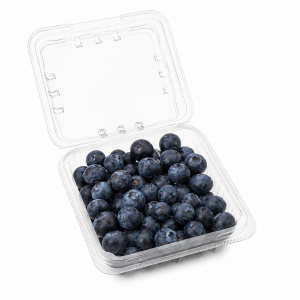
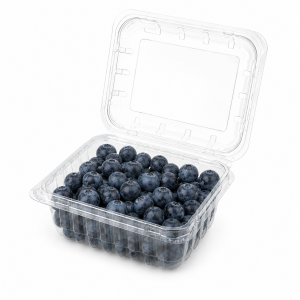
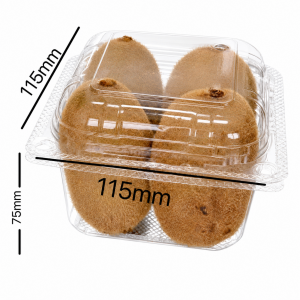
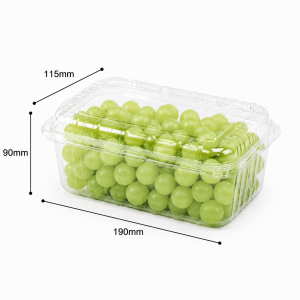
Custom dimensions are available for buyers with retailer-specific tray requirements. Contact us with your target size and we will confirm feasibility and lead time.
Conclusion
PLA fruit container outperforms conventional vented PET for blueberry freshness when cold chain conditions are consistent and the container spec is validated for your route. The modified atmosphere advantage is real — we see it in our trial data, and our buyers see it in their defect rates.
PET remains the lower-risk default for supply chains with unrefrigerated transit legs, markets with limited composting infrastructure, or buyers who can't run a validation process before committing to bulk production.
The question we always ask buyers isn't which material is better. It's which material is better validated for your specific route.
If you're comparing PLA and PET options for your blueberry operation, share your distribution route with us — we'll tell you which spec fits before you commit to anything. At YiTo Pack, samples ship within 5–7 days, and we provide EN 13432, ASTM D6400, FDA food contact, and ISO 9001 documentation for your specific structure upon request.
FAQ
Q: Can PLA fruit box replace PET blueberry clamshells directly?
A: Not always. Buyers should confirm cold-chain conditions, sealing compatibility, stacking performance, and certification requirements before switching.
Q: Is PLA suitable for blueberry export shipping?
A: Yes, when validated under 0–4°C refrigerated conditions with proper WVTR, ventilation, and stacking performance testing.
Q: What is the difference between EN 13432 and ASTM D6400 — and which one do I need?
A: EN 13432 is the EU standard, ASTM D6400 is the North American equivalent, and AS 5810 covers Australia and New Zealand. If you're supplying multiple markets, confirm which standard your retail buyers require—some accept either, others specify one. At YiTo Pack, certification documents are available for your specific container structure, not just the base material.
Q: Do we need to recalibrate our sealing equipment when switching to PLA?
A: In most cases, yes. PLA has a different heat-seal window compared to PET and some equipment will need recalibration. We recommend testing compatibility during the sample stage. When you request samples from us, we'll provide the recommended sealing parameters for your specific structure.
Q: Does PLA certification still matter in markets with limited composting infrastructure?
A: Yes—EN 13432 or ASTM D6400 certification satisfies retailer procurement scorecards regardless of local infrastructure, and future-proofs your packaging against tightening regulations. If practical material recovery is your primary goal rather than compliance, rPET is often more pragmatic in markets where industrial composting isn't available.
Q: How long does it take to get certification documents?
A: If we already hold certification for the structure you're ordering, documents ship with your samples or bulk order. If a new structure requires third-party certification, allow 4–8 weeks — build this into your seasonal timeline.
Q: Is PLA blueberry packaging significantly more expensive than PET?
A: PLA carries a 10–40% premium over standard PET, but the gap narrows at higher volumes. The full cost comparison should include certification, retailer approval cycles, and regulatory trajectory—particularly for EU exports under PPWR 2028. For most buyers we work with, the total difference is smaller than the per-unit price suggests.
If you're still weighing options, share your distribution route with us — we'll tell you which container spec fits before you commit to anything. Samples ship in 5–7 days.
Related Products


Post time: Jun-09-2026