
Choosing blueberry packaging is not just about picking a container. The right choice depends on how your berries are packed, cooled, shipped, displayed, and handled.
Punnets, clamshells, trays, and liners each play a different role. Some are designed for retail display. Some protect fruit during transport. At YiTo Pack, we help growers, packers, exporters, and fresh produce brands compare blueberry packaging types by pack weight, sales channel, cold-chain route, material requirement, and order needs. This guide will help you choose a suitable packaging structure before sampling or bulk production.
Key Takeaways
- · Punnets are flexible for small retail packs.
- · Clamshells offer better visibility, stacking, and handling protection.
- · Trays and top-seal trays suit supermarket and packing-line projects.
- · Cartons and liners support transport, export, and bulk handling.
- · Most B2B projects need more than one of these working together as a system.
Start with the Real Packaging Question
Before choosing a blueberry package, the first question should not be "Which one looks better?"
The better question is: what does this pack need to do in the real supply chain?
Blueberries are delicate. They can be damaged by pressure, poor airflow, condensation, loose packing, or long transport. A package that works for local retail may not work for export. A tray that looks good in a photo may still fail if it does not match the lidding film or sealing machine.
Before comparing packaging types, confirm the basic project conditions: pack weight, sales channel, cold-chain time, transport distance, label position, material preference, sealing method, certification needs, and order quantity.
A good blueberry packaging decision is not about one container only. It is about how the container, lid, film, label, carton, and sometimes liner work together.

Blueberry Packaging Types at a Glance
| Packaging Type | Main Role | Best For | Key Checkpoint |
|---|---|---|---|
| Punnets | Light retail packs | 125g / 250g packs | Ventilation and label area |
| Clamshells | Retail display + protection | 250g / 300g / 500g packs | Lid strength and stacking |
| Top-seal trays | Sealed supermarket packs | Private-label retail | Film and machine matching |
| Outer cartons | Transport protection | Export and wholesale | Carton fit and airflow |
| Liners | Bulk/carton support | Moisture control and repacking | Avoid over-sealing |

PLA Punnets
Compostable Punnets are simple, flexible, and easy to match with different retail channels. They are often used for 125g and 250g blueberry packs.
They are a good fit for light pack weights, short or medium distribution routes, simple retail display, and manual or semi-automatic packing.
Best for:
125g / 250g retail packs, local retail, flexible pack sizes.

Compostable Clamshells
Compostable Clamshells provide both visibility and protection. The clear structure helps buyers see the fruit, while the hinged lid keeps berries contained during handling and transport.
They are often suitable for supermarket packs, export retail packs, and branded fresh produce programs.
Best for:
250g / 300g / 500g supermarket packs, retail display, export-ready packaging.

Fruit Cylinder Tube
Clear fruit cylinder packaging is used for ready-to-eat blueberries and premium retail presentation. The transparent cylinder tube helps improve product visibility while creating a more distinctive shelf appearance.
Best for:
Premium retail packs, ready-to-eat blueberries, shelf display, and branded fruit packaging.

Trays / Top-Seal Trays
Trays offer a cleaner shelf appearance and can reduce the chance of opening during handling. They are often used with lidding film for supermarket and private-label programs.
This format works best when the tray, film, and sealing machine are tested together.
Best for:
Supermarket-ready sealed packs or packing-line projects.

Wax Produce Cartons
Wax Produce Cartons protect the whole shipment during export, pallet transport, and long-distance cold-chain distribution.
A carton affects stacking strength, pallet stability, airflow, warehouse handling, and transport protection.
Best for:
Export, wholesale, palletizing, and long-distance transport.

Absorbent Pads
Absorbent pads are support materials used inside cartons or bulk transport systems. They can help with carton protection, moisture control, and bulk handling.
They must be used carefully because too much sealing may trap humidity and create condensation.
Best for:
Bulk transport, carton protection, moisture control, and repacking support.
Choose by Sales Channel
Local Retail
Punnets, small clamshells, and simple trays are often enough.
Focus on display, handling, and cost control.
Supermarket Programs
Clamshells and top-seal trays are stronger options.
Focus on shelf display, label space, barcode placement, and stacking.
Export Cold Chain
Stronger clamshells, cartons, and liners may be needed.
Focus on ventilation, carton fit, pallet stability, and transport safety.
Bulk Transport
Corrugated cartons, liners, and bulk trays are more suitable.
Focus on carton strength, moisture balance, and damage reduction.

Do Blueberry Packs Also Need Cartons?
Yes. For many B2B projects, the retail container is only the inner pack. The carton or corrugated box protects the whole shipment.
This is especially important for export, wholesale, pallet transport, and long-distance cold-chain distribution. A carton affects stacking strength, pallet stability, airflow, warehouse handling, and transport protection.
If the carton is too weak, inner packs may be crushed. If carton ventilation does not match the clamshell or punnet, cooling may become less effective. If the carton size is wrong, packs may shift during transport.
So the question is not only which blueberry container to use—it should also be whether the inner pack and outer carton will actually work together. That difference is one of the biggest gaps between simple product buying and real B2B packaging selection.
For projects that require better moisture protection during cold-chain transport, YiTo Pack can also support wax produce cartons. These cartons help improve moisture resistance and reduce the risk of carton softening in humid handling, refrigerated storage, or export distribution. The coating structure can be reviewed based on your fruit type, carton size, transport route, and target market requirements.

Material Choice: PLA vs PET for Blueberry Packaging
Many buyers compare PLA and PET when choosing clear blueberry packaging. Both materials can be used for clamshells, punnets, and trays, but they support different packaging goals.
PET is a traditional choice for fresh produce packaging. It offers good transparency, strength, and wide market acceptance, making it suitable for many retail applications. However, conventional PET is a plastic material that does not provide compostability.
For buyers looking for a more sustainable solution, we recommend PLA packaging. PLA is made from renewable plant-based resources and can be industrially compostable under the right conditions. It provides a clear appearance similar to PET while helping brands reduce reliance on traditional plastics and meet growing demand for eco-friendly packaging.
When choosing PLA blueberry packaging, the design still needs to consider ventilation, thickness, stacking strength, and cold-chain requirements to protect fruit quality during storage and transport.
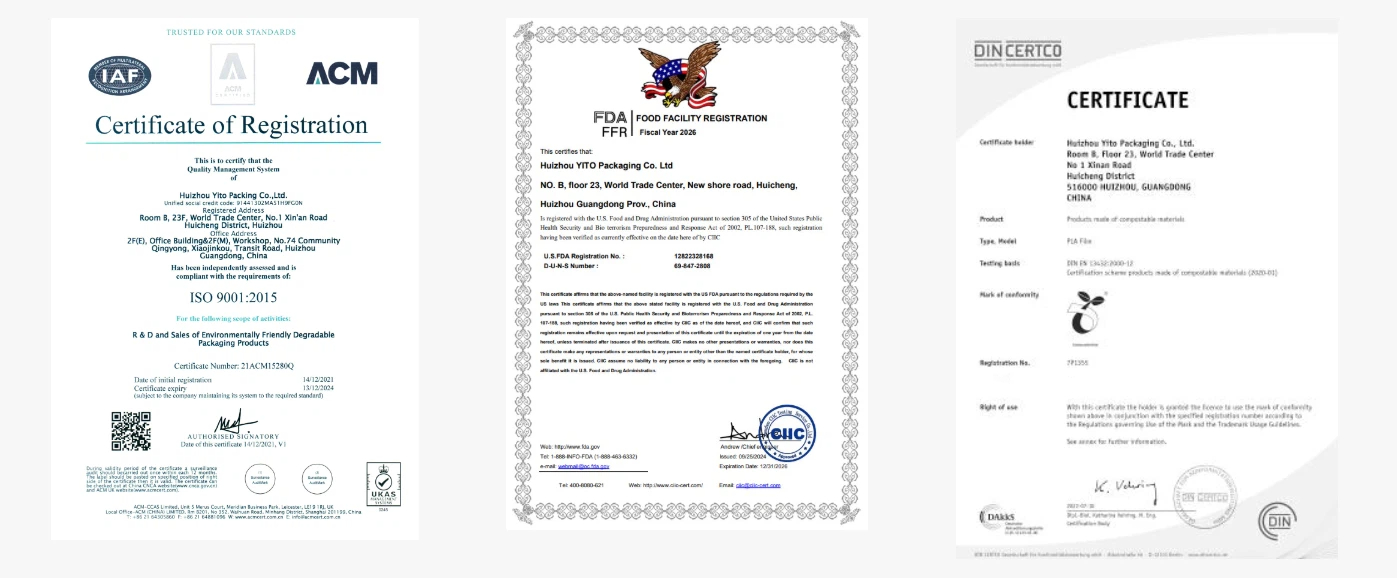
If the project involves export or retailer approval, certification should also be checked by target market. Compostability standards such as EN 13432 and ASTM D6400, as well as food-contact requirements like FDA regulations, should be confirmed according to the final material, application, and sales region.
Compliance Considerations for Export Blueberry Packaging
For buyers selling blueberries into the EU market, packaging choice is no longer only a sustainability preference. Under the EU Packaging and Packaging Waste Regulation, also known as PPWR, packaging will face stricter requirements on recyclability, packaging minimization, material use, labelling, and waste reduction.
This means blueberry packaging should be reviewed not only by appearance or unit cost, but also by whether the full packaging system can support future market compliance. Punnets, clamshells, trays, cartons, films, labels, and liners may all need to be considered as part of the same packaging system.
A material change alone is not always enough. Switching from PET to PLA may support compostable packaging goals, but the final choice still depends on the application, target market, food-contact requirements, carton system, and cold-chain conditions.
At YiTo Pack, we can help buyers review packaging structures, compare material options, match containers with films, labels, and cartons, and prepare available compliance documents based on the target market. For projects involving EU retail, export programs, or retailer sustainability targets, we recommend discussing PPWR-related requirements before sampling or bulk production.
Custom Blueberry Packaging Process

We follow a structured development process from requirement review to mass production to ensure packaging performance, stability, and supply-chain compatibility.
Why Choose YiTo Pack for Blueberry Packaging?
Choosing the right blueberry packaging is not only about selecting a container. It also requires matching the structure, material, sealing method, label area, carton fit, and cold-chain requirements.
YiTo Pack is a compostable packaging manufacturer specializing in PLA-based fresh produce packaging solutions for blueberries, strawberries, grapes, cherries, and cherry tomatoes. We support global buyers with both standard and custom packaging systems, including punnets, clamshells, trays, and film-compatible solutions.
Our support can include:
| What We Support | How It Helps Your Project |
|---|---|
| Custom sizes | Match retailer-specific tray, punnet, or clamshell requirements |
| Material options | PLA, PET, paper-based, film, and liner solutions based on application |
| Packaging system matching | Align container, film, label, carton, and transport needs |
| Sample development | Check structure, sealing, stacking, and display before bulk production |
| Compliance support | EN 13432, ASTM D6400, FDA food-contact, and other documents based on target market |
| OEM / ODM service | Support custom packaging projects for brands, growers, and exporters |
Custom dimensions are available for buyers with retailer-specific tray requirements. Contact us with your target size, pack weight, sales channel, and preferred material. We will help confirm feasibility, sample direction, and estimated lead time before bulk production.
Conclusion
Compostable blueberry packaging should not be selected by container type alone. Punnets, clamshells, trays, cartons, and liners each solve different problems in retail display, cold-chain transport, bulk handling, and compliance preparation. For most B2B projects, the safer approach is to review the full packaging system before sampling: inner pack, sealing method, ventilation, label area, carton fit, material choice, and target market requirements. This helps reduce packaging mismatch, transport damage, repeated sampling, and approval delays before bulk production.
FAQ
Q: What is the MOQ for blueberry packaging?
A: MOQ depends on the packaging type, size, material, and customization level. Standard items may support lower trial orders, while custom punnets, clamshells, trays, films, or printed components usually require higher MOQ.
Q: Can I order samples before bulk production?
A: Yes. Sample testing is recommended before bulk production, especially for custom sizes, top-seal trays, PLA materials, carton-fit testing, or export cold-chain projects.
Q: Which material is better for blueberry packaging: PET or PLA?
A: PET is commonly used for clear, rigid retail packaging. PLA can support compostable packaging goals, but it should be tested for thickness, stacking, ventilation, and storage conditions before bulk production.
Q: Are paper or molded fiber trays suitable for blueberries?
A: Paper and molded fiber trays can reduce plastic use, but they may not offer the same product visibility as clear clamshells or punnets. They are more suitable when sustainability and protection matter more than full fruit visibility.
Q: Can blueberry packaging be customized?
A: Yes. Custom size, vent layout, lid structure, label area, film matching, material, thickness, and carton fit can be developed based on pack weight, sales channel, and retailer requirements.
Related Reading
If you are comparing blueberry packaging materials, sizes, and customization options, you may also find these guides helpful:
PLA vs PET for Blueberry Packaging: Which Is Better?
Blueberry Packaging Size Guide: Punnets, Lids, and Clamshells
Custom Biodegradable Blueberry Packaging: Design, Printing, MOQ, and Order Guide
Request free samples to test clarity, stacking strength, ventilation, sealing performance, and carton fit in your real packaging conditions.
Related Products


Post time: Jun-17-2026