
Choosing blueberry packaging is not only about capacity. A 125g container used for local retail may fail during long-distance cold-chain export if the structure, lid system, and ventilation design are not matched correctly.
At YiTo Pack, we help growers, exporters, and fresh produce brands select complete blueberry packaging systems — including punnets, lids, clamshells, film-sealable trays, and protective inserts.
What you'll learn in this guide:
- · Match blueberry sizes with retail formats
- · Compare punnets, lids, clamshells, and top-seal trays
- · Understand cold-chain and stacking requirements
- · Choose packaging based on your sales channel
Why Blueberry Packaging Size Is Only One Part of the Decision
When procurement teams ask us about blueberry packaging, the first question is almost always about size: "What's the right container for 500g?" But after years of working with growers and exporters across different supply chains, we've found that size is rarely the root decision — it's the output of three more fundamental choices.
1. Fruit Weight and Retail Format
The pack weight you're targeting defines which container category you're working within:
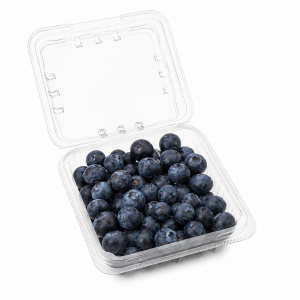
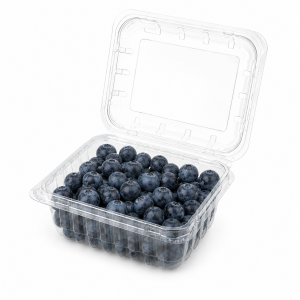
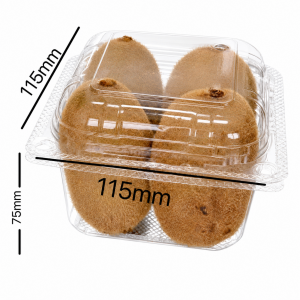
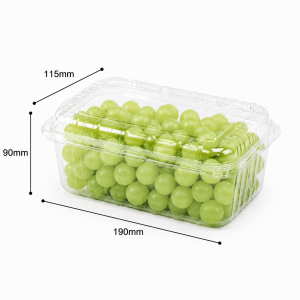
But the same 250g of blueberries can require very different containers depending on what comes next.
2. Distribution Method
How your product moves from packhouse to end buyer changes the structural requirements entirely:
· Local delivery — ventilation and display transparency matter most; structure can be lighter
· Refrigerated export — stacking strength, lid security, and condensation resistance become critical
· Supermarket supply — shelf presence, barcode placement, and label compatibility define the spec
A container that works well for local farm-to-retail supply can fail completely on a 14-day refrigerated sea shipment. We see this misalignment regularly when clients come to us after a costly season.
3. Packing Process
Your packing line determines which container types are operationally viable:
· Manual packing—punnet-and-lid systems are typically faster and more flexible
· Automatic sealing lines—film-sealable trays and hinged clamshells offer higher throughput and consistency
Understanding these three factors first means you spend less time reworking specs after sampling—and make a better decision the first time.
Blueberry Packaging Size Comparison Chart
For quick reference, here is the standard size-to-structure mapping we use when advising new clients at YiTo Pack. Think of this as a starting point, not a final answer — the columns to the right depend on the three decision factors above.
|
Pack Size |
Market Use |
Recommended Structure |
| 125g | Premium berries / snack packs | Small punnet + lid |
| 250g | Standard supermarket | Punnet or clamshell |
| 300g | Retail & export | Hinged clamshell |
| 500g | Family size | Large clamshell or top-seal tray |
| 1kg+ | Export bulk | Film-sealable tray + protective insert |
Use this table alongside your channel and process requirements. A 125g PLA punnet that works on a local farm stand may not be the right call for a UK supermarket program.

Choosing the Right Blueberry Packaging Structure
Once you've identified your target weight and distribution method, the next step is selecting the right structure. At YiTo Pack, our blueberry packaging range covers five distinct product lines—each designed for a different combination of channel, process, and protection requirements.
Blueberry Punnets: Flexible Retail Packaging
Compostable Fruit Punnets are the most widely used structure in retail blueberry programs. They offer transparent display, standard ventilation hole patterns for airflow in cold storage, and compatibility with a wide range of matching lids.
Best suited for:
· Supermarket and greengrocery supply chains
· Growers managing multiple pack sizes on the same line
· Short to medium supply chains where stacking requirements are moderate
The open PLA punnet format gives buyers full visual access to the fruit—a genuine advantage in premium retail, where presentation drives purchase decisions. Because punnets and lids are specified separately, you also get flexibility to adjust depth or lid type without retooling the entire format.
If you're supplying multiple retail customers with different label specs, punnets give you the easiest path to configure each run differently without changing your core container.
Matching Lids: When Do You Need Separate Covers?
Not every blueberry container requires a separate lid — but when it does, the lid spec matters as much as the punnet itself. Our lids are designed to pair directly with punnets, with matching footprints and tested closure tolerances.
Why separate lids make sense:
· Inventory flexibility— stock one punnet size and switch lid depth based on fruit volume
· Easier stacking— lids with recessed bases allow stable column stacking in transit
· Container depth variation— different harvest volumes in the same season can be handled without reordering punnet bases
The most common error we see with lid procurement is sourcing punnets and lids from different suppliers without confirming dimensional compatibility. Closure tolerances can vary by 1–2mm between manufacturers, which is enough to cause loose fits, poor sealing, or lid pop-off during transport. If you're working with a new supplier, always request matched samples before committing to a production run.
Hinged Blueberry Clamshells: Retail-Ready Solution
For buyers who want a single-piece container with built-in closure, our compostable PLA clamshell line eliminates the lid-matching problem entirely. The hinged design keeps the container and cover as one integrated unit from filling to shelf.
Best suited for:
· Branded fruit programs where shelf presentation is a priority
· Export supply into major supermarket chains with strict packaging specs
· Operations running automated or semi-automated packing lines where separate lid application adds complexity
Operational advantages:
· One-piece design removes lid inventory management entirely
· Secure closure reduces product exposure during packing and transport
· Faster packing cycle on lines where lid placement is a bottleneck
· Consistent appearance across retail shelves — important for brand programs
The trade-off against punnets is less flexibility in adjusting pack depth. If your fruit volume varies significantly across the season, a punnet-plus-lid system may give you more operational control.
Film-Sealable Blueberry Trays for Automatic Lines
This is the format most under-discussed in generic packaging guides — and the one that matters most to high-volume export operations.
Our film-sealable trays are designed for packing houses and exporters running continuous automatic sealing lines. Rather than a mechanical lid or hinged closure, the container is sealed with a lidding film using heat or pressure — the same technology used in modified atmosphere packaging (MAP) for extended shelf life.
Best suited for:
· Exporters shipping to long-haul markets (14–30 day transit windows)
· Packing houses with automated sealing equipment
· Operations where plastic reduction per unit is a procurement target
Key advantages over mechanical lids:
· Reduces total plastic weight per pack (film replaces a formed lid)
· Sealing speed is faster than manual lid application at scale
· Film material can be selected for specific gas transmission rates — relevant for MAP programs targeting shelf life extension
· Clean, tamper-evident presentation for premium export lines
If you're running or planning to run a high-volume export program, this is the structure worth understanding before you finalize your line configuration. We're happy to discuss lidding film compatibility and sealing equipment requirements as part of your spec consultation.
Protective Inserts and Trayliners
Blueberries don't only need a container — they need protection from the internal stresses of transit. Pressure damage, condensation pooling, and vibration bruising are the three primary causes of export quality loss that we hear about from clients after a difficult season.
Our Contenitori Alveolari (alveolar/cell inserts) are designed to sit inside outer trays or punnets and cradle individual berries in formed cells —reducing contact between fruit and eliminating the rolling and pressure damage that occurs in standard flat-bottom containers.
Where inserts add the most value:
· Long-distance refrigerated export, particularly sea freight
· Premium and gift-grade programs where cosmetic quality must be maintained through the supply chain
· Airline catering and high-end hospitality supply where per-unit presentation standards are high
The cell dimension of the insert needs to match the fruit caliber of your specific blueberry variety. Larger varieties like O'Neal and Duke require a different cell diameter than smaller varieties like Biloxi. If you're sourcing inserts and outer containers separately, this is the compatibility check most often overlooked.
How to Match Packaging with Your Sales Channel
Structural selection should follow channel logic. The table below maps buyer types to recommended packaging systems — based on what we've learned works across different supply chains.
|
Buyer Type |
Recommended System |
| Growers (local/regional) | Punnet + lid |
| Exporters | Top-seal tray + protective insert |
| Supermarket programs | Hinged clamshell + label |
| Organic / premium brands | PLA system + compostable label |
| Airline / hospitality | Alveolar insert in outer tray |
These are starting points. Channel requirements shift by market and by retailer. European supermarket programs often have tighter dimensional tolerances than North American equivalents, and some retailers specify their own container molds. If you're entering a new retail program, we recommend confirming the buyer's packaging spec sheet before finalizing your container selection.

Material Options: PLA Blueberry Packaging vs Traditional Plastic
Material selection is a separate decision from structure selection — but the two are connected, and it's worth understanding the options available before you lock in a spec.
For blueberry packaging, the most common material choices are:
· PET / rPET— standard clear material, good dimensional stability in cold chain, widely accepted by retailers globally
· PP (Polypropylene)— higher stacking strength, better performance in high-humidity cold storage, slightly less transparent
· PLA (Polylactic Acid)— compostable option, relevant for organic programs and markets with single-use plastic regulations
Our position: for size selection, structure comes first, material comes second. Choose the container format that matches your channel and process, then confirm material compatibility. PLA, for example, has different dimensional tolerances than PET under cold-chain conditions — something worth understanding before you finalize a spec.
For a detailed comparison of PLA versus PET performance in fresh produce packaging, including cold-chain stability data and retailer acceptance rates, see our PLA vs PET blueberry packaging comparison.
Custom Blueberry Packaging Size and Branding Support
Standard sizes cover most programs — but not all. If your retail customer has proprietary shelf dimensions, you're developing a private-label berry brand, or you're entering a market where standard molds don't fit the retail format, custom tooling is the right path.
At YiTo Pack, our custom fruit packaging solutions include:
Custom mold development for non-standard footprints or depths
Logo integration through label printing, embossing, or direct print on container
Compostable label compatibility for organic and sustainability-positioned programs
Display box and shipper configuration — outer packaging designed to work with your inner container spec
Film matching for trays — lidding film selected for your specific sealing equipment and gas transmission requirements
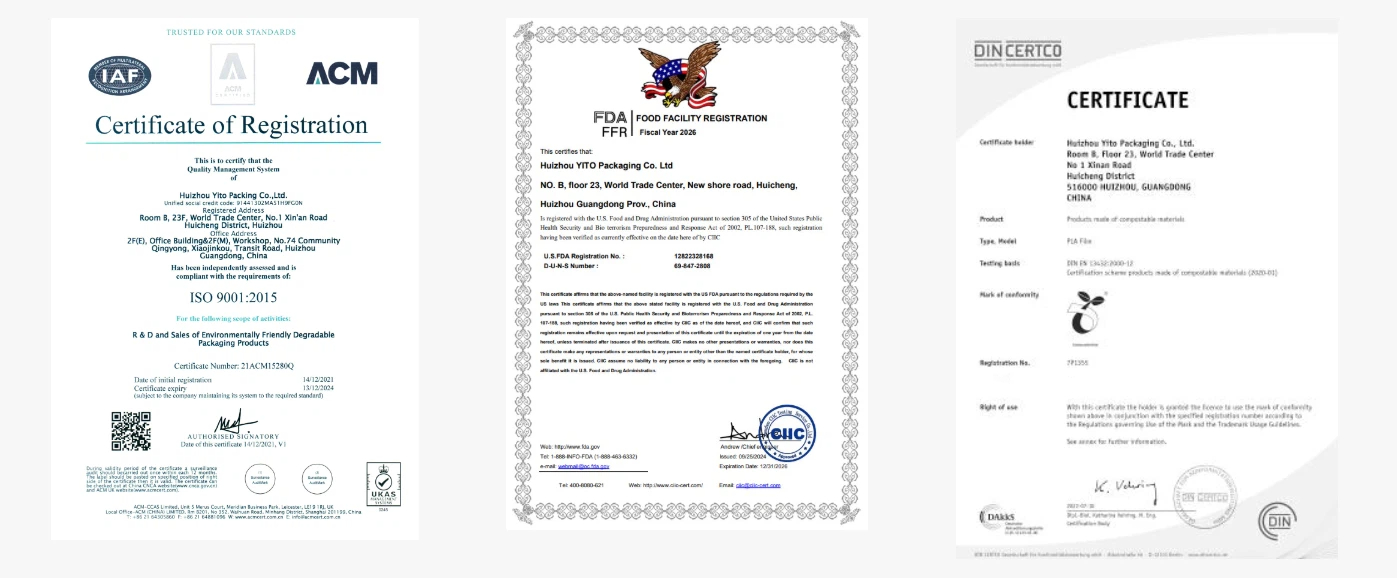
Selected YiTo Pack compostable packaging structures can meet EN13432 and ASTM D6400 requirements depending on material selection and final design— the industrial compostability standards required for EU and North American retail compliance, respectively, and relevant to PPWR 2028 alignment for buyers planning ahead. All containers meet FDA food contact requirements, which is increasingly requested as a baseline across export markets beyond the US. Our production process runs under ISO 9001, which means the consistency you see in samples carries through to bulk production.
If you're building a branded berry program from the ground up, we recommend starting with a spec consultation before tooling decisions are made. Getting the container footprint right before investing in molds saves significant time and cost downstream. YiTo Pack provides custom blueberry clamshell packaging solutions for growers, exporters, and retail brands.
Before Ordering: Information Suppliers Need From You
One of the most common delays in blueberry packaging procurement is incomplete briefs. When we receive an inquiry that's missing key information, the back-and-forth to fill in the gaps adds days or weeks to the sampling timeline.
Before recommending a size and structure, here's what we typically ask every new client:
✔ Blueberry weight— target pack weight, and whether that varies seasonally
✔ Target country / market— retail requirements and labeling regulations differ significantly by market
✔ Transport time— days from packhouse to end retailer, including any intermediate cold storage
✔ Packing method— manual, semi-automatic, or fully automated line
✔ Retailer requirements— if you have a buyer spec sheet, share it at the start; it changes everything
If you don't have all of this information yet, that's fine — we can work through it together. But the more detail you can provide upfront, the faster we can move to a useful recommendation.
Conclusion
Blueberry packaging decisions don't feel urgent — until a retailer rejects a shipment, a compliance flag surfaces mid-season, or you pull a deformed tray out of a cold-chain container three weeks into transit.
We've seen all three. And in every case, the issue was avoidable with earlier evaluation.
The right structure, the right lid system, the right material for your cold chain — none of these are complicated decisions once you have the right information in front of you. What makes them costly is leaving them until after production starts.
If you're working through a packaging spec for the next season, start with a sample. Test it against your actual cold-chain conditions, confirm your retailer's requirements, and get your documentation in order before bulk production begins.
At YiTo Pack, we work through these decisions one project at a time. When you're ready, we are too.
FAQ
What is the most common blueberry clamshell size?
The 250g hinged clamshell is the most widely used format in global supermarket programs. The 125g punnet is the most common format for premium and snack-positioning lines. For export bulk, 500g top-seal trays are increasingly preferred over mechanical-lid containers.
Are blueberry punnets and clamshells the same thing?
No. A fruit punnet is an open container that typically pairs with a separate lid. A clamshell is a one-piece hinged container where the base and cover are molded together. Both can hold the same weight of fruit, but they have different operational implications for packing lines and different shelf presentations for retail.
Which packaging is better for blueberry export?
For long-haul refrigerated export, film-sealable trays paired with protective inserts generally outperform mechanical-lid containers on both structural integrity and shelf-life performance. For shorter export routes (under 7 days), hinged clamshells are often sufficient. The right answer depends on your specific transit time and retailer requirement.
Can PLA blueberry clamshells replace PET?
Yes. PLA blueberry clamshell packaging can be a suitable alternative for many refrigerated fresh produce programs when temperature control, packaging design, and supply-chain conditions are properly matched. For export projects, YiTo Pack recommends sample testing under your actual storage and transportation conditions before switching materials.
Not sure which blueberry packaging size fits your supply chain? Tell us your container size, blueberry weight, and target market — YiTo Pack will recommend a matched system and arrange samples before you commit to production.
Related Products


Post time: Jun-11-2026