
Sourcing biodegradable cellophane bags for Australia starts with four checks: material, finished structure, environmental claim and application.
For importers, food brands and packaging distributors, these decisions affect product approval, packaging performance and repeat orders. YiTo Pack helps buyers turn a broad request for “biodegradable cello bags” into a clear commercial specification before bulk production.
Key Takeaways
- · Confirm genuine regenerated cellulose, not BOPP sold as “cello”.
- · Match environmental claims with the evidence available for the finished bag.
- · Review film, coating, ink and closure together.
- · Select the bag around the actual packed product and destination.
- · Approve the sample before mass production.
Start With Genuine Regenerated Cellulose
“Cello bag” is often used as a general name for clear packaging, but genuine cellophane and BOPP are different materials.
Cellophane is based on regenerated cellulose, while BOPP is polypropylene. Both can be transparent and printable, but they support very different material and sustainability positioning. For buyers specifically sourcing plastic free packaging bags, genuine regenerated-cellulose film provides a clearer material direction than polypropylene bags marketed under the general term “cello”.
Australian buyers should therefore confirm the film grade, thickness, coating and bag structure at quotation stage.
YiTo Pack connects the Technical Data Sheet, material declaration and final bag specification to the same SKU. This gives procurement teams a clearer basis for approval and reduces confusion when the product is reordered later.
What Should Buyers Check Before Approving the Film?
The material review should answer four points:
What film is used?
What thickness is supplied?
Is the film coated?
What additional components are added during printing or bag conversion?
A commercial bag may include:
Cellulose Film → Coating → Printing → Adhesive/Closure → Finished Bag
The finished structure matters more than the base film alone.

For buyers sourcing biodegradable packaging in Australia, regenerated-cellulose bags can form part of a broader sustainable food packaging strategy for bakery, confectionery, tea, premium retail and other suitable applications. The key is to match the material, finished bag structure and supporting documentation to the actual Australian project rather than selecting packaging on environmental wording alone.
Can the Finished Bag Support Your Environmental Claim?
Australian buyers increasingly use packaging claims to support brand positioning, but those claims need evidence behind them.
Terms such as bio-based, biodegradable, commercially compostable and home compostable describe different characteristics. Clear wording is more useful than broad claims such as “green” or “eco-friendly”.
YiTo Pack recommends reviewing the planned environmental wording together with the selected material and artwork, so documentation gaps can be identified before printing. Buyers searching for compostable cellophane bags should verify whether the certification evidence applies to the selected film only or to the complete printed and converted bag. Coatings, inks, adhesives, thickness and closure components all need to be considered when reviewing the finished packaging claim.
AS 4736, AS 5810 and EN 13432
Australian compostability projects commonly refer to:
- · AS 4736 for commercial composting
- · AS 5810 for home composting
EN 13432 can provide useful supporting information, but it should not simply be treated as an Australian equivalent.
For B2B buyers, the practical process is:
Define the Claim → Confirm the SKU → Review the Evidence → Approve Artwork
This is especially important for private-label projects where environmental claims appear under the buyer’s own brand.
Does the Certification Cover the Finished Printed Bag?
A certificate for the base film may not describe every printed or converted version of the product.
Thickness, printing inks, coatings, adhesives and other components can affect the finished structure and certification scope.
YiTo Pack therefore reviews the packaging specification as a complete system rather than treating the film certificate as the entire approval file.
This helps buyers resolve material and artwork issues before they become expensive production changes.
Match the Bag to the Australian Application
Material selection should follow the actual packaging function.
A bakery bag, confectionery pack, cigar sleeve and retail carry bag may all use transparent film, but they have different performance and market requirements.
Australian state rules can also vary for certain bag categories. The safest sourcing approach is to define the bag type, dimensions, destination state and intended use before commercial approval.
YiTo Pack builds the initial RFQ around five essentials:
Packed Product + Bag Format + Size + Destination + Annual Volume
Film grade, printing, barrier performance and closure can then be matched to the project.
Commercial Value Changes by Buyer Type
Bakery, Confectionery and Food Brands
Food packaging needs to match the actual product and packing conditions.
A confectionery project may focus on oxygen and aroma protection. Bakery packaging may need moisture control, grease resistance and reliable sealing. Tea and herbs often place more emphasis on aroma retention.
YiTo Pack uses the packed product and packing process to help select the appropriate cellulose film structure before printed production begins.
For brands, cellulose packaging can also create a stronger material story at retail. Transparent regenerated cellulose keeps the product visible while helping premium food lines differentiate themselves from conventional plastic-packed alternatives.
The strongest sustainability message is one that matches the actual finished package and its supporting evidence.

Cigar and Premium Retail Packaging
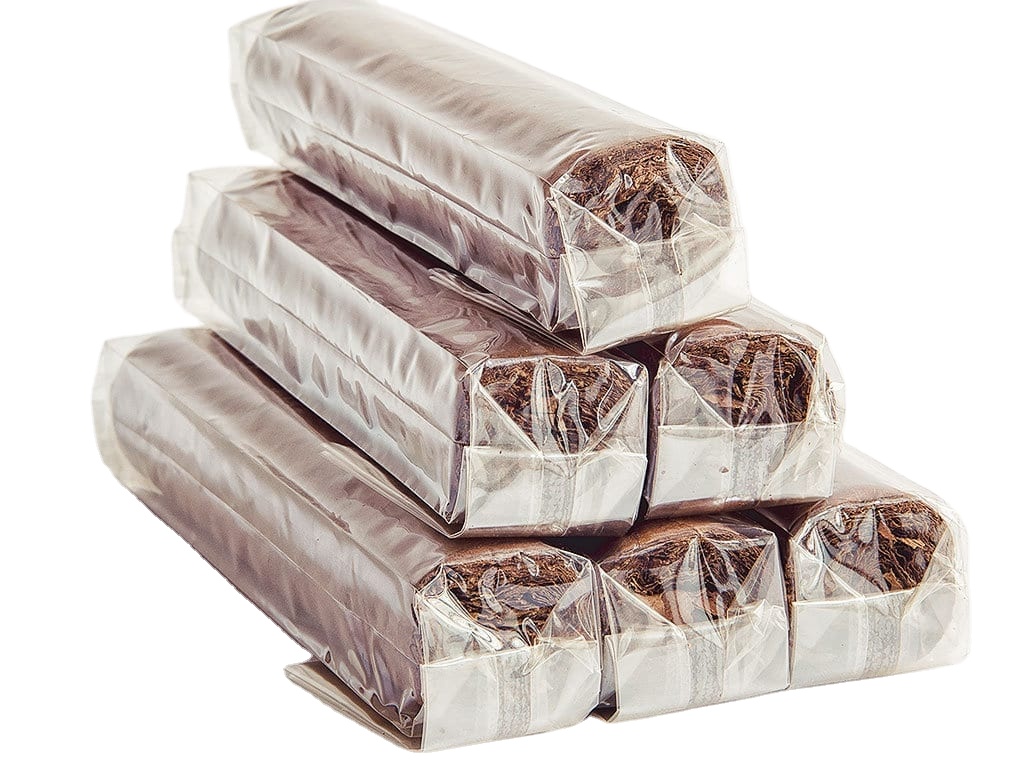
Cigar packaging has different priorities: clarity, film appearance, dimensions and moisture behaviour.
Regenerated cellulose gives premium cigar packaging a crisp transparent appearance while keeping the cigar and band visible.
Compared with conventional polypropylene sleeves, it can also provide a more distinctive material story for premium product positioning.
YiTo Pack can coordinate film grade, sleeve size, printing and bag conversion under one specification, allowing the buyer to evaluate the complete package on a physical sample.
Packaging Distributors and Wholesalers
For distributors, repeatability matters as much as the first order.
Film grade, dimensions, thickness, artwork and carton packing should remain traceable across multiple SKUs and repeat purchases.
YiTo Pack supports projects from material selection and printing through bag conversion, sampling and export packing.
Standard samples can typically be prepared in around 7 days, while standard bulk production is generally 15–20 days after approval, depending on the final specification.
Once one structure has been approved, additional sizes can be developed more efficiently.
What Should Food-Packaging Buyers Verify?
A useful food-packaging review starts with:
Product → Contact Conditions → Storage → Barrier → Sealing
Dry bakery products, oily foods and aromatic products can require different cellulose-film structures.
Heat-sealing conditions also vary by film grade. TDS data can provide a starting range, while the final temperature, pressure and dwell time should be tested on the buyer’s actual packing equipment.
YiTo Pack uses the sample stage to connect technical data with real packaging performance.
This gives QA and procurement teams a clearer basis for approving the final structure.
Prepare Import Information Before Shipment
Australian importers need the correct tariff classification for the finished product, together with the commercial information required for customs clearance.
A generic HS code copied from another bag or material may not match the actual cellulose structure. The importer or customs broker should confirm classification according to the final product.
Shipment preparation also matters when timber pallets, crates or dunnage are used, as Australian biosecurity requirements may apply.
YiTo Pack can provide product specifications, carton information and shipment details so the importer, freight forwarder and broker have the information needed before dispatch.

What Should Be in a Supplier Approval File?
A useful supplier file should connect documents to the exact product being ordered.
| Area | What to Confirm |
|---|---|
| Material | Film grade, TDS, thickness |
| Finished Bag | Size, coating, print, closure |
| Claims | Relevant certification evidence |
| Application | Food-contact or performance documents |
| Production | Artwork, sample and QC specification |
| Shipment | Carton and packing information |
YiTo Pack follows a simple project sequence:
Material Verified → Structure Matched → Documents Checked → Sample Approved
This creates a cleaner reference for procurement, QA and future reorders.

Australian Cellophane Bag Sourcing: Go or Clarify?
| Ready to Proceed | Clarify First |
| Regenerated cellulose confirmed | Only described as “cello” |
| Finished structure recorded | Only base film documented |
| Claim supported by evidence | Generic eco claim |
| Application clearly defined | One bag for every use |
| Sample approved | Bulk production before testing |
| Import information ready | Classification still unclear |
The quotation becomes meaningful once these basic questions are resolved.
Why Choose YiTo Pack?
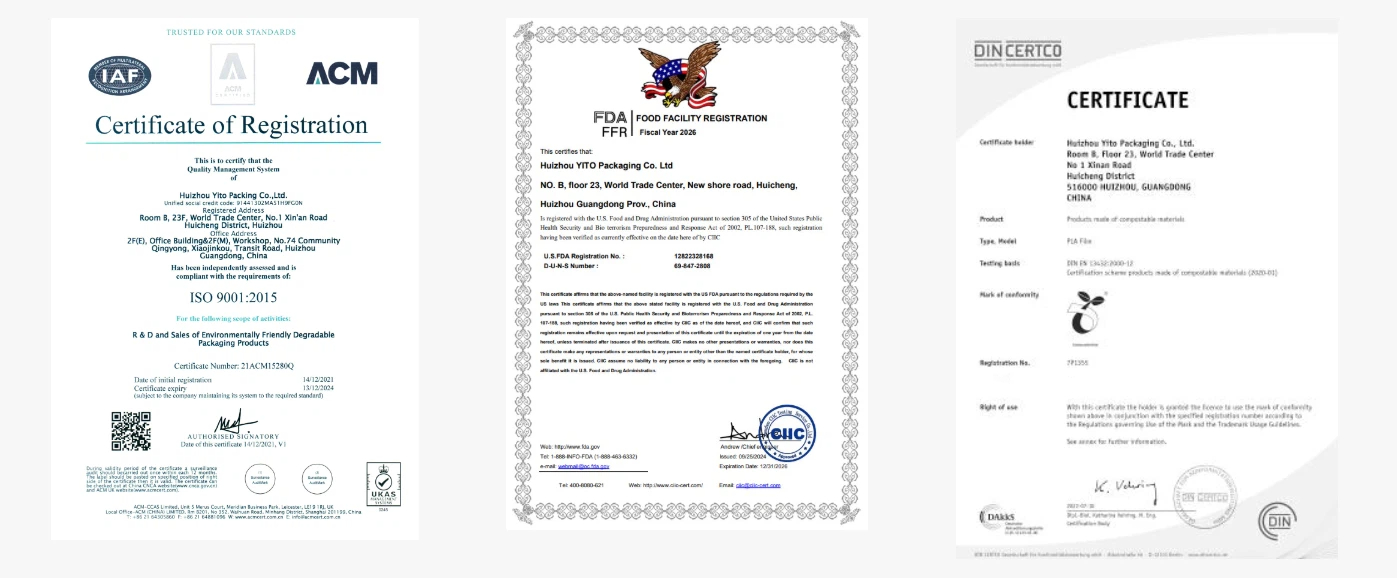
YiTo Pack can support Australian buyers with a range of certification and compliance documents, including AS 4736, AS 5810, EN 13432, ASTM D6400, BPI, FDA, EU 10/2011, LFGB, FSC/PEFC and ISO 9001, depending on the selected cellulose film and finished bag structure.
For compostable packaging projects, AS 4736 and AS 5810 are especially relevant to the Australian market, while EN 13432 and ASTM D6400 can provide additional compostability evidence for applicable products. Food-contact projects can also be supported with relevant FDA, EU 10/2011 or LFGB documentation, and FSC/PEFC options can support responsible fibre sourcing claims where applicable.
Conclusion
A successful biodegradable cellophane bag project needs to do three things at once: protect the product, support the brand and stand up to purchasing and compliance checks.
That means looking beyond the green label. Confirm the material, market, evidence, performance, packaging data and production controls. Then test the finished bag before committing to volume.
From our side as a packaging seller, the aim is not to push every buyer toward the same bag. It is to develop a structure that suits the product and can be produced consistently when the next order arrives.
YiTo Pack supports that process from material review and sampling through production-line testing and bulk supply. In the end, a reliable packaging decision should rest on two things: what the bag can prove and how well it performs in real use.
FAQ
1. Are biodegradable cellophane bags made from plastic?
Genuine cellophane is made from regenerated cellulose, while BOPP “cello” bags are polypropylene plastic.
2. What is the main Australian standard for commercially compostable packaging?
AS 4736 is the key Australian standard for commercial compostability, while AS 5810 applies to home compostability.
3. Can biodegradable cellophane bags be custom printed?
Yes. Size, thickness, printing, coating and bag structure can be customised for B2B projects.
4. Are cellophane bags suitable for food packaging?
They can be, provided the selected film and finished structure match the food type, contact conditions and sealing requirements.
5. What should Australian buyers check before ordering?
Confirm the material, finished structure, environmental claim, application, supporting documents and approved sample before bulk production.
Related Reading
Biodegradable Cellophane Bags Wholesale: A B2B Sourcing Guide
Biodegradable Cellophane Bags in the UK: Supplier Guide & Compliance Overview
Biodegradable Cellophane Bags Size Guide: A3/A4/A5/A6/5x7/9x12 Complete Reference
Related Products


Post time: Aug-12-2026