PLA Tea Bags for Tea Packaging | Bulk Compostable Tea Bag Supplier


Looking for PLA tea bags that can run smoothly in your production line and meet export requirements?
Compostable PLA tea bags are plant-based filter bags designed for loose leaf and herbal tea packaging. Suitable for pyramid and flat formats, they provide stable filtration, neutral taste, and compatibility with ultrasonic sealing systems. Ideal for bulk supply, OEM customization, and export-compliant tea packaging projects.
Factory-direct bulk supply with stable quality and flexible customization. Designed for tea brands, OEM factories, and packaging distributors, our PLA tea bags support pyramid and flat formats, ultrasonic sealing compatibility, and eco-friendly positioning—helping you achieve reliable production performance while meeting sustainability and export compliance requirements.

Product Specifications
PLA tea bags for tea packaging are ideal for wholesale buyers and bulk distribution
Material: PLA (Polylactic Acid)
Size: Custom sizes available
Thickness: Customizable
MOQ: Standard: 5,000 pcs
Custom: 10,000 pcs (size / mesh / printing)
Packaging: Bulk / inner bags / retail-ready packs
Lead Time: Sample: 5–7 days
Mass production: 2–4 weeks
Sealing: Ultrasonic compatible (not suitable for heat sealing systems)
Available Product Types
PLA tea bags can be configured in different formats depending on your product and positioning:
Pyramid (triangle) tea bags for premium loose leaf tea
Flat tea bags for high-volume production
With string & tag or without
Mesh or non-woven structures
Can PLA Tea Bags Work in Your Production Line?
After confirming supply conditions, the next real question is
Will these tea bags actually work in your system?
In our experience, most issues don’t come from the material itself but from a mismatch between the tea bag structure and the production setup.
✔ Machine Compatibility
PLA tea bags can generally run on:
Pyramid tea bag machines for loose-leaf tea
Flat tea bag machines for standard formats
However, actual performance depends on your machine configuration, speed, and forming system. This is why sample testing is important before bulk production.
✔ Sealing Method (Where Most Problems Happen)
This is one of the most critical factors.
Compostable PLA tea bags are typically designed for:
Ultrasonic sealing
Folding or stitching structures
But they are not always suitable for traditional heat sealing systems.
If your production relies on heat sealing, switching to PLA requires careful validation.
This is often the key reason why some projects fail—not because PLA is unsuitable, but because the system was not adjusted.
How to Choose the Right PLA Tea Bag Structure for Your Product
Instead of starting with “PLA vs nylon vs paper,” a more practical approach is to match the tea bag structure to your product.
For example, if you are packing loose-leaf tea, pyramid mesh tea bags are usually preferred because they allow better expansion and infusion.
If your product is herbal tea or larger particles, a more breathable structure helps maintain extraction performance.
For fine powder tea, filtration becomes the priority, and the material structure must be tighter.
At the same time, your packaging format also matters.
Some brands require string & tag for retail positioning, while others focus on machine efficiency and simplified structures.
Performance of PLA Tea Bags in Real Production and Use
From a production and user perspective, PLA tea bags are chosen because they balance performance and sustainability.
In brewing, they provide stable water flow and allow proper infusion, which is important for both taste and product presentation.
In production, they offer sufficient strength during filling and handling, with a low risk of breakage when properly matched with the machine.
Another important factor is taste safety.
Food-grade PLA materials are odor-neutral and do not affect tea flavor, which makes them suitable for premium tea products.

Compliance & Sustainability for Export Markets

For many B2B buyers, especially those supplying EU and US markets, compliance is not optional.
PLA tea bags from YITO PACK are produced with materials that meet:
FDA food contact requirements
LFGB standards
EN13432 compostability certification
ASTM D6400
This allows tea brands to align with sustainability positioning and regulatory expectations in international markets.
PLA vs Nylon vs Paper Tea Bags (Quick Comparison)
| Factor | PLA | Nylon | Paper |
|---|---|---|---|
| Sustainability | Compostable | Plastic-based | Limited |
| Appearance | Transparent | Transparent | Opaque |
| Cost Level | Medium | Higher | Lower |
| Sealing Method | Ultrasonic | Heat seal | Heat seal |
| Best Use Case | Eco & premium tea | Premium but plastic | Cost-sensitive products |
What Should You Confirm Before Switching to PLA Tea Bags?
Before switching to PLA tea bags for tea packaging, most B2B buyers find it more effective to focus on system compatibility rather than comparing materials like nylon tea bags or paper tea bags alone.
In practice, a smooth transition depends on a few key factors working together.
First, your tea bag machine type and sealing method will directly determine whether compostable PLA tea bags can run efficiently without adjustments. Ultrasonic sealing of tea bags typically provides the most stable results, especially for pyramid tea bags used in loose-leaf applications.

Second, your tea type plays an important role. Loose-leaf tea, herbal tea, and flower tea packaging generally perform well with PLA pyramid tea bags, as the mesh structure allows better infusion and product visibility.
Third, your packaging positioning should be considered. If your product is targeting premium tea packaging or eco-friendly tea brands, biodegradable tea bags made from PLA can support both sustainability claims and shelf appeal.
Finally, confirming these factors through tea bag sample testing is often the most reliable way to reduce risk before moving into bulk tea bag production.
By aligning material, machine, and product requirements early, you can ensure that your PLA tea bag supplier is not just offering a sustainable option but a practical solution for your production system and market strategy.
Custom PLA Tea Bags for OEM Projects
For brands and manufacturers working on customized tea packaging, PLA tea bags can be adapted to different project requirements.
We support customization in:
Size and shape
Mesh or non-woven material selection
String & tag configuration
Logo and branding elements
In most OEM projects, we work closely with buyers to align material selection, machine compatibility, and packaging design before scaling production.
Applications of PLA Tea Bags in Tea Packaging
PLA tea bags are widely used in tea packaging projects where both product performance and sustainability positioning are important.
In practical applications, these tea bags are commonly used for:
Loose-leaf tea packaging
Pyramid PLA tea bags are often used for loose-leaf tea, allowing better expansion of tea leaves and improving infusion performance. This makes them suitable for mid-to-high-end tea products where brewing quality and visual presentation matter.
Herbal tea and flower tea
For herbal blends and flower teas, breathability and filtration stability are key. PLA tea bags provide enough structure to hold larger particles while maintaining good water flow during brewing.
Premium retail tea products
Many brands choose PLA tea bags for premium product lines, especially when using transparent pyramid formats. The combination of appearance, performance, and compostable material helps enhance shelf appeal and perceived value.
Eco-friendly tea brand packaging
Compostable PLA tea bags are often used by brands targeting EU and US markets, where sustainability and compliance requirements are increasingly important. They support compostable packaging positioning while meeting food-grade standards.

Bulk Buying Guide for PLA Tea Bags
For B2B buyers, selecting the right PLA tea bag supplier directly impacts production efficiency, product quality, and long-term supply stability.
MOQ & Production
Typical bulk requirements:
Standard tea bag specifications: 5,000 pcs MOQ
Custom tea bags (size, mesh, printing): 10,000 pcs MOQ
OEM orders supported
MOQ is usually determined by material setup, machine configuration, and printing requirements. For most projects, starting with standard specifications can help reduce initial cost and testing risk.
Customization Options
PLA tea bags can be customized to match different tea products and brand requirements.
Buyers can customize:
Tea bag size and shape (pyramid / flat)
Mesh or non-woven material structure
String & tag configuration
Logo printing on tags or packaging
Packaging formats (bulk / inner bags / retail packs)
For brands targeting eco-conscious markets, custom compostable packaging solutions can help align with sustainability positioning and regulatory expectations.
Lead Time
Sample: 3–7 days
Mass production: 3–5 weeks
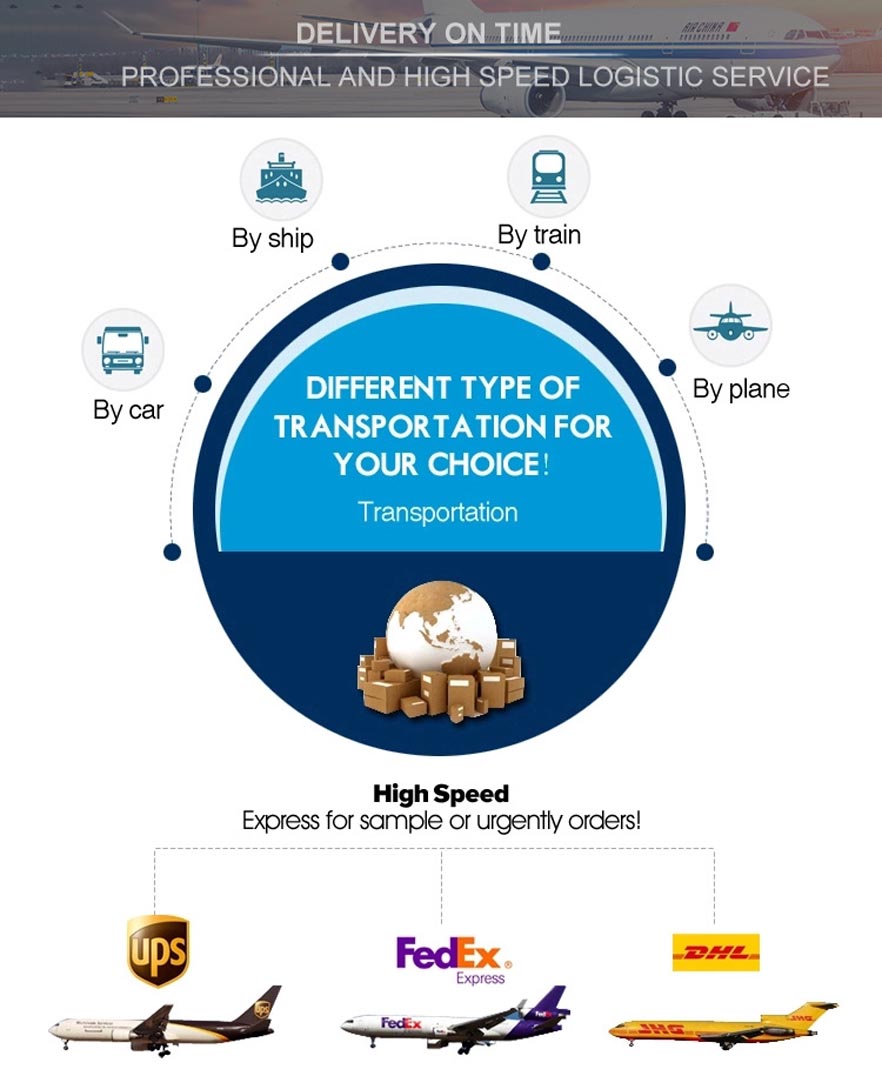
Export support available
Lead time may vary depending on customization complexity and order volume. For new projects, sample testing is recommended to confirm machine compatibility and product performance before scaling production.
Production Compatibility Considerations
Before placing bulk orders, buyers should evaluate how PLA tea bags fit into their existing system.
Key factors include:
Tea bag machine type (pyramid or flat)
Sealing method (ultrasonic vs heat sealing)
Tea type (loose leaf, herbal, powder)
Confirming these factors early can help avoid production issues such as sealing failure or breakage during filling.
Why Choose YITO
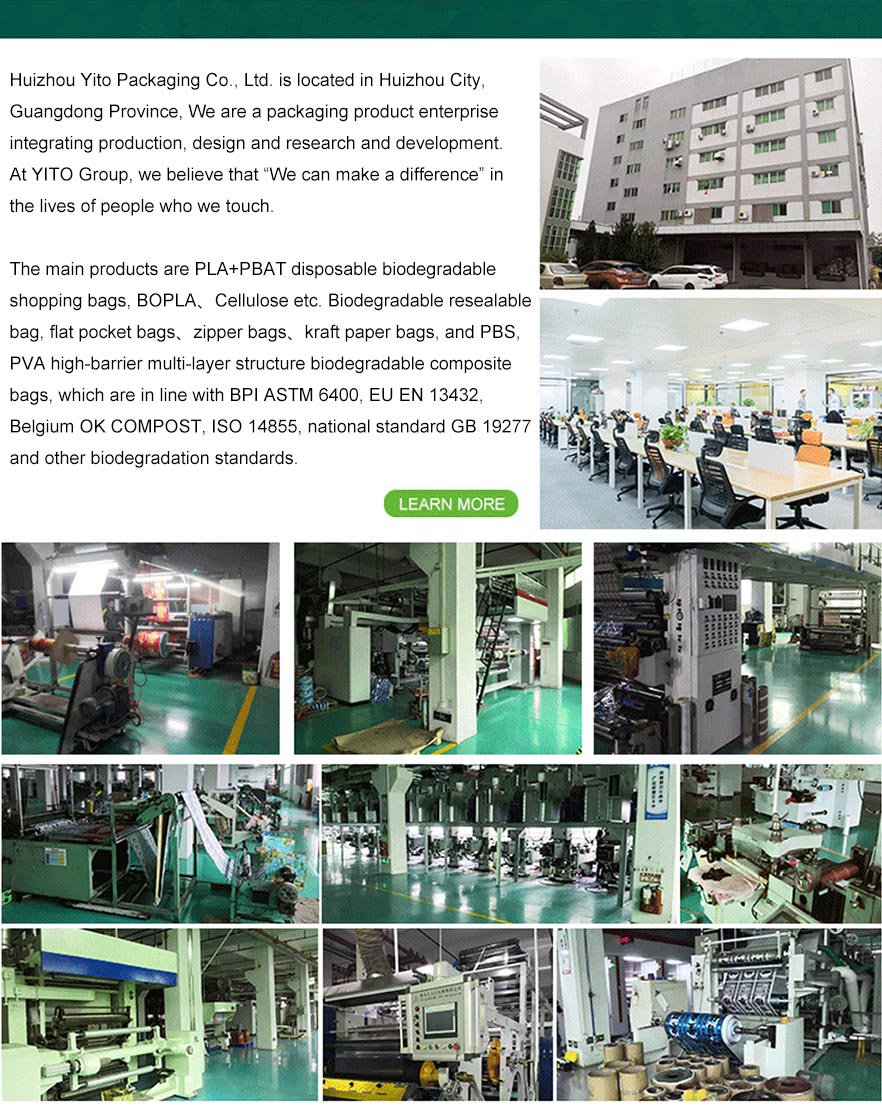
YITO PACK is a manufacturer specializing in compostable packaging materials, including PLA tea bags and cellulose-based solutions, supplying bulk orders to global tea brands and packaging distributors.
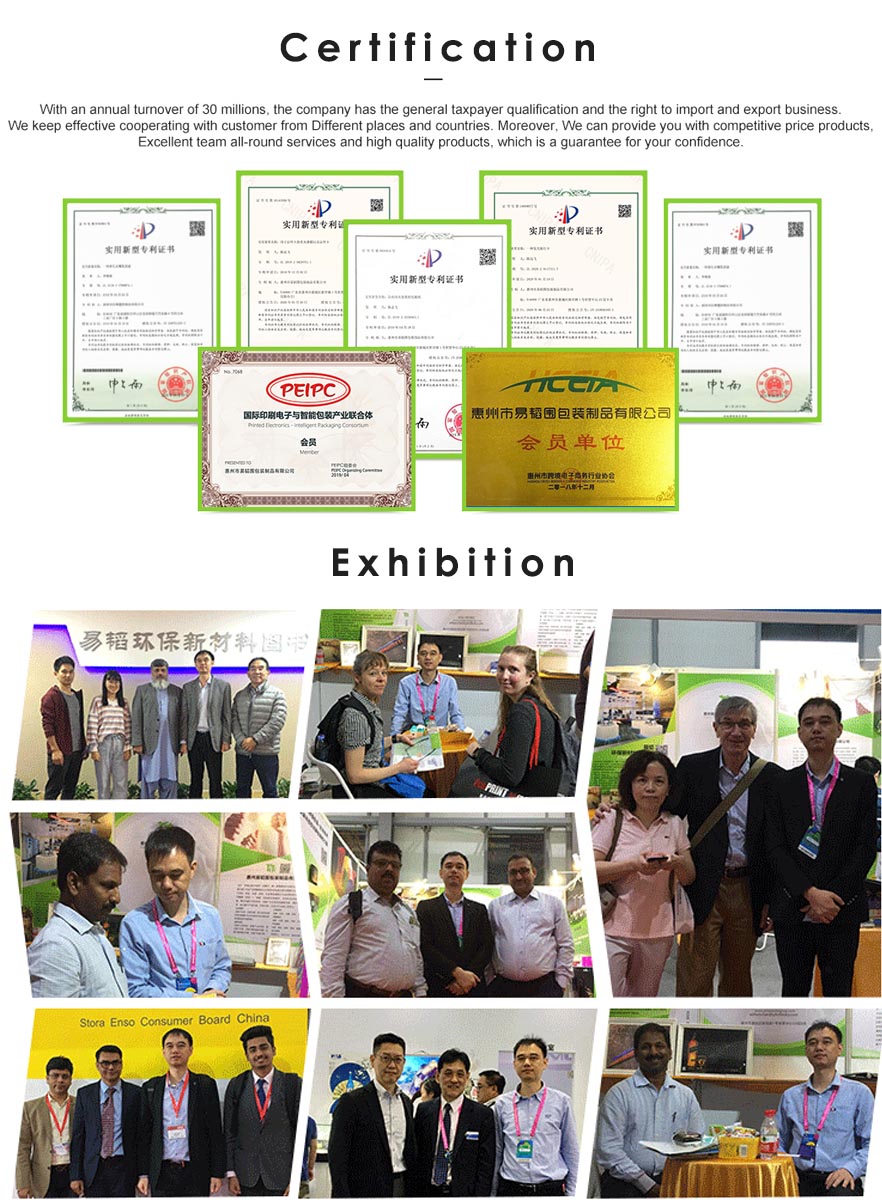
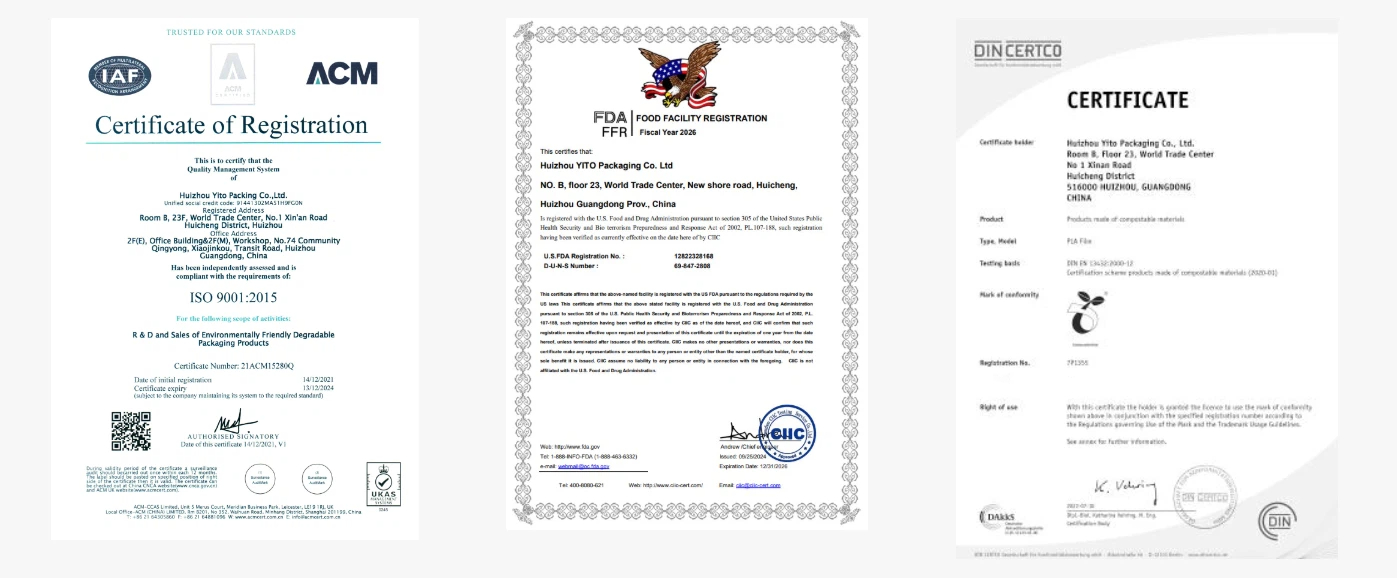
Certified under the ISO 9001 quality management system
Materials comply with FDA food-contact standards
Compliant with LFGB requirements for EU markets
Certified compostable under EN13432 and ASTM D6400
Our production follows strict quality control procedures, with each batch tested for material safety, filtration performance, and structural stability.
This reflects our role as a trusted supplier and a leading manufacturer in sustainable packaging solutions.
FAQ
Q: Can PLA tea bags be used on all tea bag machines?
A: Not all. PLA tea bags are generally compatible with pyramid and flat tea bag machines using ultrasonic sealing. If your production relies on heat sealing, compatibility must be tested before switching.
Q: What is the typical MOQ for PLA tea bags?
A: Standard specifications usually start from 5,000 pcs, while custom orders (size, mesh, printing) typically require 10,000 pcs or more, depending on production setup.
Q: Can I customize the tea bag size and branding?
A: Yes. We support customization, including size, shape, mesh type, string & tag, and logo printing on tags or packaging.
Q: Do PLA tea bags affect tea taste?
A: No. Food-grade PLA materials are odor-neutral and do not affect the flavor of tea, making them suitable for premium tea products.
Q: Are PLA tea bags compostable and certified?
A: Yes. Our PLA tea bags comply with EN13432 and ASTM D6400 compostability standards, and the materials meet FDA and LFGB food contact requirements.
Q: What types of tea are suitable for PLA tea bags?
A: They are suitable for loose-leaf tea, herbal tea, and flower tea. For very fine powder tea, the material structure should be carefully selected to ensure proper filtration.
Q: How long does production take?
A: Samples typically take 5–10 days, and mass production usually takes 3–5 weeks, depending on customization and order volume.
Q: How can I test compatibility before bulk ordering?
A: We recommend starting with samples to test on your machine and confirm sealing performance, filling stability, and final product quality before placing bulk orders.