
For many farms, cooperatives, and fresh produce suppliers, the biggest inefficiencies don’t happen during growing—they happen after harvest.
From what we’ve seen, problems often start during handling, packaging, and distribution:
– Packaging formats don’t match across stages
– Products get damaged due to poor ventilation or pressure
– Different suppliers increase coordination costs
– Traditional plastic creates compliance pressure in EU and US markets
This is where packaging stops being just a material choice—and becomes a system decision.
PLA packaging for fruits and vegetables is not just an alternative material. When used correctly, it helps connect seedling handling, post-harvest packaging, and retail distribution into one more consistent system.
What Is PLA Packing for Fruits & Vegetables?
PLA (polylactic acid) packing is a plant-based, compostable alternative to traditional petroleum-based plastics, widely used in fruit and vegetable packaging across agricultural supply chains.
Made from renewable resources such as corn starch, PLA packaging for fruits and vegetables is certified under standards like EN13432 and ASTM D6400, making it suitable for markets with strict sustainability and compliance requirements.
In practical applications, PLA packaging is commonly used in:
Containers used for handling seedlings in early-stage operations
Compostable Clamshell containers for fresh produce retail and distribution
If you're working with fresh produce packaging, PLA packaging for fruits and vegetables can help you simplify your operations.
Compliance with EU and US sustainability regulations
Improved product presentation and shelf appeal
Reduced environmental impact across the supply chain

Traditional Packaging vs PLA Packaging: What’s the Real Difference?
For many buyers, the decision is not just about “switching materials.”
It’s about understanding how different packaging systems perform across real operations.
Below is a practical comparison based on real supply chain usage:
| Factor | Traditional Plastic Packaging (PET/PP) | PLA Packaging |
|---|---|---|
| Raw Material | Petroleum-based | Plant-based (corn starch, renewable resources) |
| Environmental Impact | Non-biodegradable, long-term waste accumulation | Industrially compostable (EN13432 / ASTM D6400) |
| Compliance | Increasing regulatory pressure (EU/US bans & restrictions) | Easier to meet sustainability and ESG requirements |
| Product Visibility | High transparency (PET) | Comparable clarity for retail display |
| Ventilation Design | Available but often standardized | Flexible design optimized for fresh produce |
| End-of-Life | Recycling-dependent (low actual recycling rates in some regions) | Compostable under industrial conditions |
| Brand Perception | Neutral or negative (plastic concerns) | Positive (eco-friendly, sustainable positioning) |
Where Packaging Starts to Break Down in Real Operations
For many growers, cooperatives, and fresh produce suppliers, packaging is not just a material choice—it often becomes a source of operational challenges.
Common issues include:
Inconsistent packaging between planting and retail stages
Different suppliers for seedling clamshell and retail packaging can lead to mismatched sizes, inefficiencies, and higher coordination costs
Product damage during handling and transport
Soft fruits and leafy vegetables are easily affected by pressure, moisture, and poor ventilation
Difficulty meeting sustainability and compliance requirements
Traditional plastic packaging may no longer meet EU and US regulatory expectations
Lack of standardization in bulk operations
Without unified packaging systems, farms and distributors often face inefficiencies in stacking, transport, and inventory management
This is why many buyers are now shifting toward integrated PLA packaging solutions that can support both early-stage cultivation and retail packaging within one consistent system. Working with YITOPACK, which provides both PLA clamshells for vegetable packing and clamshell packaging, can help reduce these issues by improving consistency, simplifying sourcing, and supporting scalable operations.
PLA clamshell packaging for retail applications
In agricultural applications, PLA packaging is not only used for retail but also plays a critical role in the early stages of cultivation. To make this system work in real operations, packaging needs to support both early-stage handling and final-stage distribution—not as separate solutions, but as one connected flow.
Handling and Transporting Seedlings with PLA Containers
From what we’ve seen, tray design directly affects planting consistency. If root space is too limited, survival rates drop. If drainage is poor, root damage increases. PLA containers for seedlings are designed to support safe handling, short-term storage, and transfer between different stages.
These solutions are widely used in export-oriented supply chains where compliance and consistency are critical.
Multi-cell designs help organize seedlings efficiently and improve planting consistency.
Drainage holes help prevent water accumulation and reduce the risk of root damage.
Lightweight and stackable structures make bulk handling more efficient.
For large-scale growers, standardized PLA seedling containers help improve consistency, reduce labor input, and optimize planting efficiency.
After germination, seedlings are transferred to greenhouse or open-field environments.
Greenhouse applications
Compostable plant containers support controlled environments where humidity and temperature are critical.
Bulk planting efficiency
For cooperatives and farms, standardized trays improve planting speed and reduce labor costs.
Instead of looking at product categories alone, a more practical question is the following:
In which situations does compostable produce packaging actually improve performance?
From what we’ve seen, eco-friendly PLA clamshell packaging works best when
– Product visibility directly affects retail sales (e.g., berries, microgreens)
– Moisture control and ventilation are critical to maintain freshness
– Products are sensitive to pressure and require structured protection
– Sustainability requirements are part of procurement decisions
In these cases, PLA is not just a packaging material—it becomes part of the operational solution.
Harvesting, Sorting, and Post-Harvest Handling for Fresh Produce
Once crops reach maturity, proper handling becomes essential.
Gentle harvesting to protect product quality
Sorting and grading for market standards
Preparing produce for packaging and transport
This stage directly affects shelf life and product presentation. After harvesting and sorting, selecting the right packaging becomes the next critical step to maintain product quality and prepare for distribution.
Retail Packaging with PLA Clamshell Packaging for Fresh Produce
Fresh produce such as microgreens, berries, and herbs is commonly packed in clamshell containers for retail distribution.
Microgreens grown from seedling trays are typically transferred into PLA clamshell packaging to maintain freshness, visibility, and product protection during transport and display.
These containers provide the following:
High transparency for retail presentation
Ventilation to maintain freshness
Protection during logistics and handling
Why More Buyers Are Choosing PLA Packaging
From our experience at YITOPACK, more buyers are choosing PLA packaging not just for sustainability but because it fits better with today’s market and operational needs.
When you’re working with fresh produce packaging, the real decision is not just about materials.
It’s about whether the packaging actually works for your supply chain and your target market.
What we see buyers focusing on
– If you are selling to the EU or US markets
You’ll find that compliance is no longer optional. PLA packaging helps you meet sustainability requirements more easily and avoid future changes
– If you care about product quality and freshness
In many projects we’ve worked on, ventilation and structure matter more than expected. A well-designed PLA clamshell can help you reduce damage and maintain freshness
– If you are building a retail or brand presence
Packaging is no longer just protection—it directly affects how your product is perceived. PLA supports a clearer, eco-friendly positioning
– If you want to simplify your supply chain
From what we’ve seen, using a more consistent packaging system—from seedling to retail—can reduce coordination issues and improve efficiency
If you’re only focused on short-term cost, traditional plastic may still work
But if you’re thinking about the following:
✔ compliance
✔ operational consistency
✔ long-term positioning
Then, PLA packaging is often the more practical choice
How to Choose the Right PLA Packaging (B2B Guide)
When selecting PLA packaging for fresh produce, the key is not just choosing a material—but making sure the packaging matches your actual operation.
From what we’ve seen, most issues don’t come from PLA itself, but from mismatches between packaging design and real-world use.
For example:
– Poor ventilation can lead to condensation and reduce shelf life
– Incorrect sizing can reduce stacking efficiency and increase transport cost
– Weak structural design may lead to product damage during handling
That’s why choosing the right structure is critical.
In practice, buyers usually evaluate PLA packaging based on two stages:
Seedling stage → handling and transfer
Retail stage → protection and presentation
Each stage requires different specifications.
Seedling tray specifications
Cell size and depth determine how well roots develop during early growth. If root space is too limited, survival rates drop, while poor drainage can lead to root damage.
Proper tray design helps improve planting consistency and reduces losses during transfer.
Clamshell size and ventilation
For retail packaging, container size should match the product type (berries, leafy greens, microgreens).
Ventilation design is critical:
– Too little airflow → condensation risk
– Too much airflow → faster dehydration
The right balance helps maintain freshness during transport and display.
MOQ and customization
Buyers should evaluate whether standard sizes meet their needs or if custom packaging is required.
Custom options such as logo printing and structure design are often used to improve brand positioning in retail markets.
Logistics and export requirements
For bulk operations, stackability and transport durability are essential.
At the same time, compliance with EU and US regulations (such as compostability standards) plays a key role in material selection.
Based on these factors, many buyers choose to work with suppliers that offer both seedling trays and PLA clamshell packaging solutions.
From our experience at Yito Pack, this integrated approach helps:
– reduce coordination between multiple suppliers
– improve consistency across different stages
– simplify sourcing and production planning
If you're managing fresh produce packaging across planting and retail stages, aligning both under one supply system can significantly improve efficiency.
From our experience working with fresh produce exporters and packaging distributors, integrated PLA packaging solutions are increasingly preferred because they reduce supplier fragmentation, improve operational consistency, and support scalable bulk supply.
This is particularly important for businesses managing both planting and retail packaging stages.
– PLA clamshell packaging for fresh produce (MOQ: 5,000–10,000 units)
– Custom branding and structure design
– Sample lead time: 3–7 days
– Mass production: 2–3 weeks
This allows buyers to build a more consistent and scalable packaging system from handling to retail.

Manufacturer View: What Buyers Should Prepare
To optimize sourcing and production efficiency, buyers should clearly define:
Application scenario (seedling / retail packaging)
Material requirements (PLA or alternatives)
Structural specifications (size, design)
Sustainability goals (compostable standards)
Target market (EU, US, etc.)
Having clear requirements at this stage helps reduce communication time, avoid repeated revisions, and ensure that the final packaging solution matches both operational needs and market expectations.
In practice, working with an experienced supplier can make this process much more efficient. A reliable packaging partner can provide technical suggestions, recommend suitable materials and structures, and help balance sustainability goals with cost and performance.
For businesses handling both seedling and retail packaging, suppliers offer integrated compostable packaging solutions for vegetable applications. YITOPACK specializes in providing integrated PLA packaging solutions across multiple application stages.
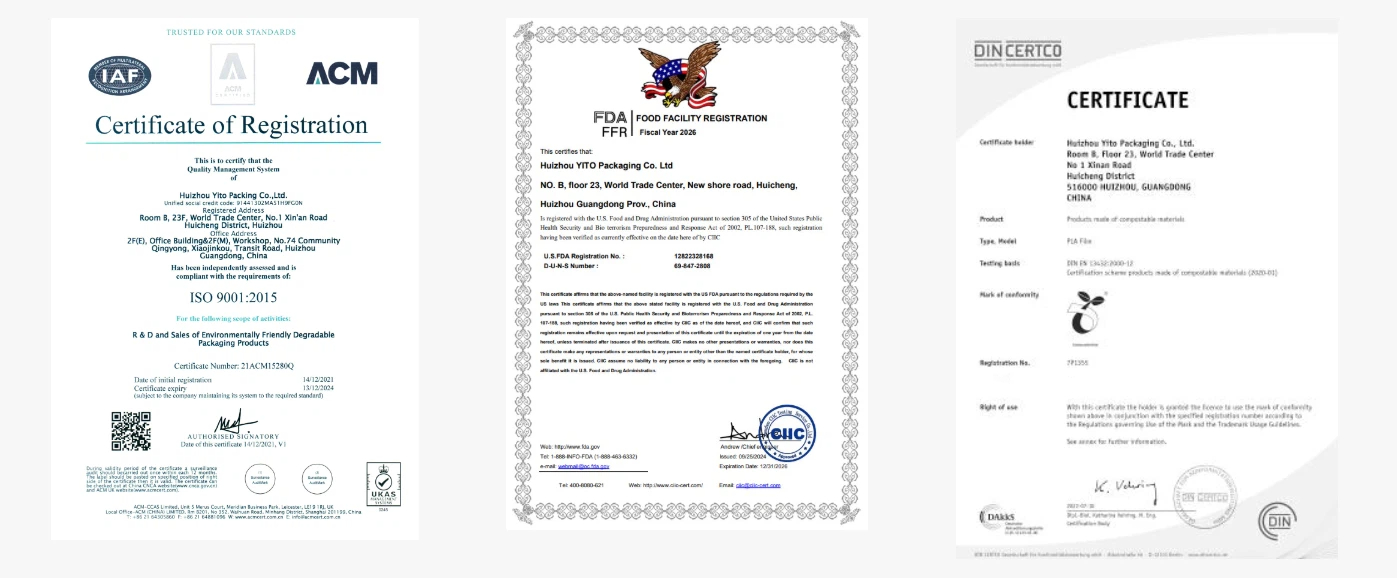
At Yito Pack, we provide certified PLA packaging solutions that meet international standards such as ISO9001, EN13432, and FDA. These certifications help ensure your packaging meets both performance and compliance requirements across different markets.
Conclusion: Building a Sustainable Seedling Retail System
From seedling cultivation to retail, every link in the agricultural supply chain—planting, harvesting, packaging, and distribution—affects the final quality, operational efficiency, and environmental footprint of products. The PLA-based solution can seamlessly connect all parts of the process: it helps seedlings grow healthily, makes planting easier, and can be turned into packaging that meets retail needs.
For farms, cooperatives, and packaging suppliers, choosing PLA seedling boxes and clamshell containers is not just a material replacement but an upgrade to a more systematic and sustainable operational approach. When the planting, packaging, and distribution strategies are coordinated, companies can truly achieve a three-win situation: reducing unnecessary material waste, calmly responding to increasingly strict market compliance requirements, and providing consumers with fresh agricultural products with higher added value.
FAQ
In many cases, switching to PLA packaging for fruits and vegetables helps reduce packaging inconsistencies across different stages.
Q: Are PLA seed containers compostable?
Yes, PLA seedling containers are industrially compostable and meet EN13432 standards.
Q: Can PLA clamshells be used for fresh produce?
Yes, they are widely used for microgreens, fruits, and vegetables in retail packaging.
Q: What is the difference between PLA and PET packaging?
PLA is plant-based and compostable, while PET is petroleum-based and recyclable but not biodegradable.
If you're looking for reliable PLA packaging solutions for agricultural supply chains, it's worth working with an experienced supplier who can support both performance and compliance.
Related Products


Post time: Apr-22-2026