
When we talk with buyers about packaging films, the conversation usually starts the same way:
“Should we use PLA film or PET film?”
“Is cellulose better than BOPP film?”
But from what we’ve seen at YITOPACK, that’s rarely where the real problem lies.
Most packaging issues don’t come from the material itself.
They show up later—on your production line, in storage, or during transport.
We’ve worked with projects where a film looked perfect on paper but failed at high-speed packaging. Others met sustainability goals but ended up increasing total costs because of inefficiencies.
So over time, we’ve come to see this very clearly:
You’re not just choosing a material.
You’re choosing whether your entire packaging system will work smoothly or not.
At YITOPACK, we position ourselves as a system-first packaging partner, helping you integrate films, structures, and applications into a system that performs in real production.
Before You Choose a Film, Ask Yourself One Question
Instead of asking, "Which film is better?" we usually ask our clients something else first:
“What are you really trying to optimize in this project?”
Because once that becomes clear, the direction becomes much easier.
From our experience, most projects fall into one of three categories.
Some of you are working on compliance-driven projects. Maybe you’re exporting or supplying to retailers with strict sustainability requirements. In these cases, your biggest concern is not cost—it’s whether your packaging can meet regulations and enter the market without risk.
Others are working on value-driven products. If you’re in cosmetics, premium goods, or retail packaging, you already know packaging is part of the product experience. You’re not just protecting what’s inside—you’re shaping how it’s perceived.
And then there are cost-driven operations, which we see very often in large-scale production. Here, what matters most is stability, efficiency, and cost control. You don’t want surprises—you want something that runs reliably, every time.
So before we even talk about materials, we usually say, "Let's align on what matters most to you first."
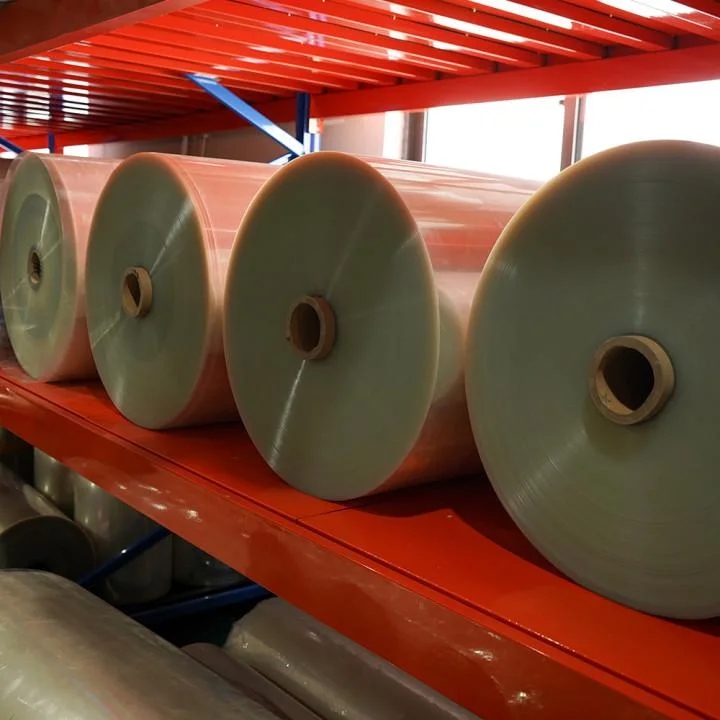
We Don’t Compare Materials First—We Look at Film Strategies
Standards that guide our material selection
Every film we supply is aligned with at least one of the following frameworks, depending on your market:
- EN13432 – industrial compostability (EU)
- ASTM D6400 – US compostability equivalent
- FDA 21 CFR – food contact safety
If you need a specific certification, we map it before the material is recommended — not after.
If you start by comparing materials, it’s easy to get lost.
If you start by understanding strategies, decisions become clearer.
At YITOPACK, we usually frame film selection in three directions.
When You’re Moving Toward Sustainable Packaging
If your priority is compliance or environmental positioning, biodegradable films naturally become part of the conversation.
We often work with materials like PLA, cellulose film, and acetate film. Each has its own strengths—biodegradable PLA film offers clarity and structure, making it a practical option for sustainable food packaging applications; cellulose film gives you excellent barrier and a premium feel, and acetate brings a more natural texture and breathability.
But what we always remind our clients is this:
You’re not choosing these materials just because they’re “eco-friendly.”
You’re not choosing a film. You’re choosing a packaging system that works
You’re choosing them because they help you reduce compliance risk and meet market expectations.

When Packaging Needs to Add Value
In other cases, especially for retail or branded products, the conversation changes completely.
Here, packaging is not just functional—it’s strategic.
We’ve seen clients significantly improve product perception by using functional films, such as starlight films, glitter film, rainbow film, and twinkle star film. These materials add subtle sparkle, iridescence, and dynamic visual effects to packaging surfaces, enhancing surface quality and overall presentation. In these projects, something important shifts: packaging is no longer a cost—it becomes part of how you create margin.
When Stability and Cost Come First
Of course, many of you are running high-volume operations, where consistency is everything.
In these situations, standard films like BOPP or PET Film are still the most practical choice. They’re stable, widely available, and optimized for large-scale production.
We often tell clients, "If your priority is efficiency, don’t overcomplicate the solution."
What We’ve Learned: Application Matters More Than Material
From what we’ve seen across different projects at YITOPACK, a reliable packaging setup is rarely based on a single film. It’s usually a combination of materials, each solving a specific problem.
Here’s how these materials are used in real packaging applications:
Section 1 — Sustainable Packaging (Food / Fresh Produce)
At YITOPACK, we combine different materials to build packaging solutions that perform in real production—not just in theory.
PLA and cellulose support your sustainability goals.
Functional films enhance product value and branding.
BOPP and PET ensure stable, efficient production.
Because in the end, it’s not about choosing one material.
It’s about making sure your entire packaging system works—consistently, reliably, and at scale.

Used for wrapping fresh produce where moisture control and compostability are required. Suitable for supermarkets and short shelf-life products.

Designed for retail-ready fruit packaging. It offers high transparency and structural protection, and supports compostable packaging requirements.

A versatile option for flexible packaging, often used in food applications that require a balance between sustainability and performance.
Section 2 — Premium Packaging (Cosmetics / Retail)

Used for product labeling and tamper protection in retail packaging, especially where sustainability positioning is important.
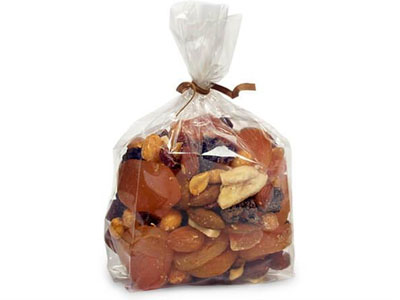
Ideal for nuts, snacks, and specialty retail products. Provide good barrier performance with a premium, natural look.

Widely used in cigar packaging, offering breathability and a high-end presentation while maintaining product quality.
In premium retail applications, we’ve also seen growing interest in starlight films, which add subtle sparkle and texture to the surface. When applied to packaging surfaces—such as tubes or flexible packs—it creates a subtle shifting shimmer under different lighting angles. This dynamic visual effect adds depth and movement, helping your product stand out more naturally on the shelf and further strengthening premium brand perception.

Every Decision Is a trade-off—and That’s Normal
If there’s one thing we always tell our clients, it’s this:
There is no “perfect film.”
Every option involves trade-offs between:
Performance
Cost
Compliance
If you push for sustainability, costs may increase.
If you focus only on cost, compliance flexibility may be limited.
If you aim for premium positioning, your material structure becomes more complex.
So instead of asking, “Which is best?" we usually guide the conversation toward the following:
“Which trade-off are you willing to accept?”
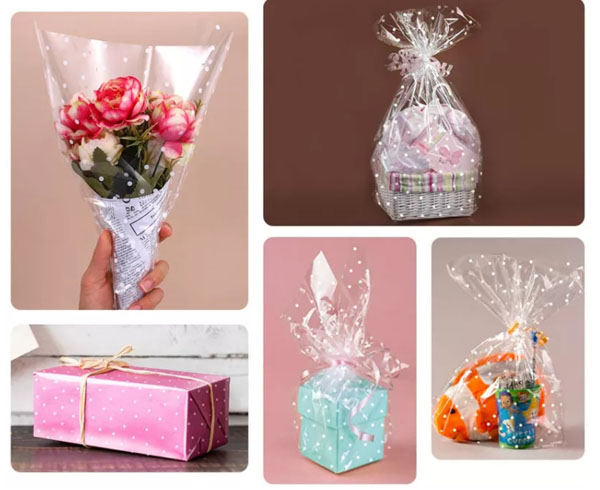
From Choosing a Film to Building a Packaging System
As projects become more mature, we see a shift in how buyers think.
Instead of asking, “Which film should we use?”, they start asking:
“How should our packaging system be structured?”
They look at:
outer layers for protection and presentation
inner layers for sealing and barrier
labeling and finishing elements
This approach spreads risk and improves consistency.
And very often, it leads to a realization:
The issue was never just the material—it was the system design.

How We Work with You at YITOPACK
How we evaluate films before recommending them
For each film type, we run four internal checks:
Seal strength across temperature ranges (typical: 80–140°C)
Coefficient of friction for high-speed feeding
Transmission rate (WVTR/OTR) for barrier-critical applications
Real-line simulation using customer-provided machine parameters
Only films that pass these four gates enter our active portfolio. At YITOPACK, we don’t see ourselves as just a material supplier. We work with you to understand your application, your constraints, and your priorities. Because from our perspective, a wrong decision at the selection stage is far more expensive than the material itself.
Let’s Start with Your Application
If you’re currently evaluating packaging films, you don’t need to finalize your material right away.
You can start by:
- defining your application scenario more clearly
- testing different options in real conditions
- or simply sharing your project with us for a second perspective
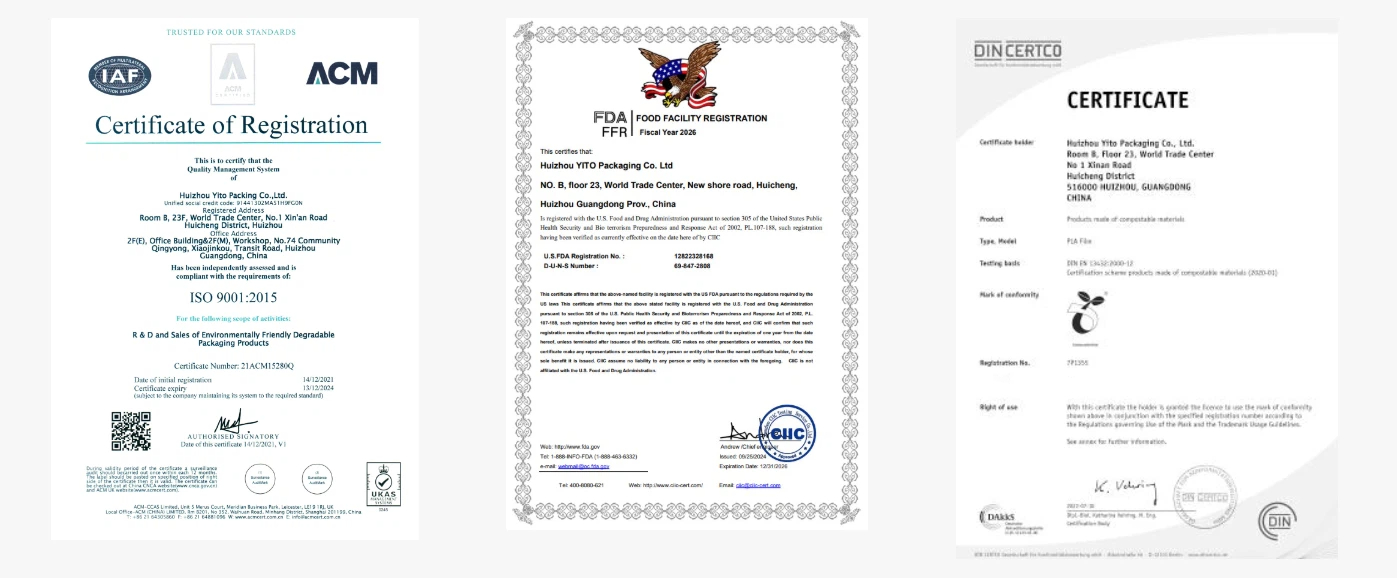
At YITOPACK, our materials are developed and supplied in line with internationally recognized standards, including FDA food-contact compliance, LFGB, and EN13432 compostability requirements, helping you move forward with confidence when sustainability and regulatory alignment are part of your project.
From our experience, many issues can be avoided early—if the right questions are asked at the beginning.
Conclusion
There is no “best” packaging film—only the one that fits your application.
Start with your priorities, test in real conditions, and focus on building a system rather than choosing a single material.
At YITOPACK, we are not just a film supplier. We are a packaging system partner. We help you combine the right materials to ensure your packaging performs where it matters most—in real production.
FAQ
Yes. Every film we supply is backed by relevant compliance documentation. For food contact, we work with FDA 21 CFR and LFGB standards. For compostability in Europe and the US, our bio-based films are designed to align with EN13432 and ASTM D6400 requirements, and we can provide supporting test summaries upon request. We do not assume a material is compliant—we map it to your target market before recommending it.
We don’t rely on datasheets alone. Before we recommend any film for high-speed or high-volume applications, we run a series of internal checks: seal strength across temperature ranges (typically 80–140°C), coefficient of friction for feeding stability, and barrier properties (WVTR/OTR) where needed. Where possible, we also simulate line conditions using customer-provided machine parameters. This has helped us avoid mismatches that would otherwise show up only during production.
Trying to replace a conventional film with a sustainable one without adjusting the rest of the packaging system. For example, a PLA film may seal perfectly on one machine but fail on another if temperature or pressure isn’t recalibrated. Or a cellulose film may look great in a sample but create drag in high-speed feeding. Our experience is that the material itself is rarely the problem — the system around it is. That’s why we usually start with your line, not with a material datasheet.
Feel free to contact us for samples or custom packaging solutions.
Related Products


Post time: May-05-2026