
Quick Answer: Why Use Cellophane for Flower Packaging?
Cellophane film is one of the most widely used materials for flower packaging, especially in applications such as cellophane flower sleeves, flower wrapping for gift bouquets and bags, and flower wrapping paper bags.
For flowers, packaging is not only about protection—it is about presentation. Cellulose allows brands to showcase color, shape, and design while still protecting products from dust, handling damage, and environmental exposure.
With different coating options such as uncoated, semi-permeable, and high-barrier films, buyers can choose the right balance between appearance, protection, cost, and sustainability.
A Plant-Based Transparent Packaging Material—Cellophane Film
For flower packaging buyers, the key challenge is balancing visual presentation, product protection, and sustainability requirements.
Biodegradable cellophane film, derived from natural materials such as wood pulp, is made through regenerated cellulose technology—it is an authentic plant-based film, reducing reliance on petroleum-based plastics. It not only brings high transparency and glossy packaging effects but also degrades in natural environments, perfectly balancing appearance aesthetics and environmental responsibility. Because cellulose film (cellophane) is not made from petroleum, brands that want to reduce plastic usage but are unwilling to sacrifice high-end visual effects often choose it for food packaging, retail packaging, or some special-purpose packaging.
When used in cellophane flower sleeves, it helps create a clean and eye-catching bouquet shape and supports a more sustainable packaging position through "more sustainable material selection."
Among different formats, T-shaped cellophane flower sleeves (T-shirt-style sleeves) are one of the most widely used options in fresh flower packaging.
T-type sleeves offer superior coverage and a more snug fit than flat bags because of their expanding side gussets. Flowers can be easily covered from the top, improving packaging speed and consistency.
This structure is especially suitable for supermarkets, wholesale flower markets, and retail distribution, where fast packaging and stable presentation are essential.

Why Compostable Cellophane Film Is Ideal for Flower Packaging
High Transparency for Better Product Display
Flower packaging is highly visual.
Biodegradable Cellophane Film allows customers to clearly see the following:
- Flower color
- Arrangement details
- Overall bouquet quality
This directly improves retail appeal, shelf visibility, and purchase conversion rates
Flexible Wrapping for Different Flower Types
Whether you are packaging:
- Fresh flower bouquets
- Artificial flower arrangements
- Mixed gift sets
Cellophane film for flower packaging can easily adapt to different shapes and sizes without tearing or damaging the product.
This flexibility reduces packaging complexity and improves packing efficiency.

Protective Performance for Storage and Transport
Cellophane film helps protect flowers from:
- Dust and contamination
- Handling damage
- Environmental exposure
For fresh flower packing, semipermeable options can also support air exchange and moisture balance, helping extend shelf life.
For artificial flowers, it ensures long-term cleanliness and presentation stability.
Sustainable Packaging Advantage
With increasing regulations in markets like the EU and the US, sustainability is becoming a key requirement.
Compostable cellophane film for flower packaging offers the following:
- Biodegradable material options
- Compostable packaging potential
- Reduced environmental impact
This benefit makes it a strong alternative to traditional plastic flower wraps, especially for brands targeting eco-conscious consumers and ESG goals.
Types of Cellophane Film for Flower Packaging
Biodegradable Cellophane Film
- Plant-based material
- Compostable options available
- Supports eco-friendly branding
Best for: Retail brands targeting sustainability-focused consumers
Uncoated Cellophane—Breathable & Natural
- High clarity
- Good breathability
- Lightweight
Best for: Fresh flower wrapping and simple bouquet packaging
VC/VA Coated Cellophane — Semi-Permeable
- Controlled moisture and air exchange
- Improved flexibility
- Balanced performance
Best for: Fresh flowers requiring breathable packaging
PVDC Coated Cellophane — High Barrier
- Strong moisture resistance
- Better protection during shipping
- Durable performance
Best for: Artificial flowers, gift packaging, and e-commerce delivery

Applications of Cellophane in Flower Packaging

Fresh Flower Bouquet Wrapping
Widely used by florists, supermarkets, and distributors, T-shaped cellophane flower sleeves are ideal for fresh flower packaging and bouquet display applications:
Daily bouquet sales
Event and wedding flowers
Retail display packaging
Biodegradable cellophane sleeves are commonly used in flower wrapping for gift bouquets and bags, helping improve presentation while maintaining product protection.
Artificial Flower Packaging Bags & Sleeves (Key for Retail & Decoration)
In artificial flower packaging, structure and cleanliness are more critical than breathability. Cellophane artificial flower packaging bags are widely used for: Artificial flower sleeves for retail display. Clear plastic flower bags for dustproof packaging T-shaped flower packaging bags for bulk packing Custom printed flower packaging bags for branding. Compared with loose wrapping, using structured cellophane flower bags helps maintain the original shape of artificial flowers, prevent dust accumulation, and improve shelf presentation.
Common in:
Home decoration products
Gift packaging
Long-term display items
For long-term display products such as home decoration flowers or gift items, high-barrier coated cellophane bags (such as PVDC-coated films) are often preferred to ensure better protection and stability. Especially suitable for dust-proof and premium presentation packaging. For retail-ready products, cellophane flower sleeves are widely used to keep artificial flowers clean, structured, and visually appealing.
Gift & Decorative Packaging
Cellophane enhances presentation for:
Flower gift sets
Holiday packaging
Premium bouquet arrangements
Adds a high-end, glossy, and professional look. In many retail environments, flower wrapping paper bags are combined with transparent film to create a layered, premium packaging look.
E-commerce Flower Packaging
Used as a protective outer wrapping to:
Prevent dust
Maintain shape
Improve unboxing experience
Important for online flower brands and DTC packaging
Key Features Buyers Should Consider
Buyers typically evaluate key parameters such as breathable cellophane performance, high barrier properties, and heat sealable capabilities:
Transparency and gloss level
Thickness and flexibility
Barrier performance (moisture/air)
Heat seal compatibility
Printability and customization
Sustainability certifications (EN13432, ASTM D6400, etc.)
Choosing the wholesale cellophane film for flowers depends on your product type, sales channel, and target market requirements

Common Search Terms Buyers Use
When sourcing cellophane film for flower packaging, buyers often search for:
- wholesale cellophane film for flowers
- cellophane flower sleeves supplier
- compostable flower wrapping film bulk
- custom printed cellophane packaging
Including these specifications in your sourcing process helps match the right supplier faster.
How to Choose the Right Cellophane Film for Your Application (Buyer Guide)
| Application | Recommended Type | Key Requirement |
|---|---|---|
| Fresh flower bouquets | VC/VA coated cellophane | Breathability & moisture balance |
| Artificial flowers | PVDC-coated cellophane | Dust protection & barrier |
| Gift packaging | Coated glossy film | High transparency & premium look |
| E-commerce packaging | Thick coated film | Durability & protection |
For buyers sourcing wholesale cellophane film for flowers, this guide helps quickly match the right material with specific packaging needs and reduce trial-and-error costs. The best choice depends on whether your priority is freshness, protection, appearance, or logistics performance. In high-volume packaging scenarios, T-shaped flower sleeves are often preferred due to their faster packing efficiency and more consistent presentation compared to flat sleeves.
Common Problems Buyers Face with Sustainable Flower Packaging
In real sourcing scenarios, many buyers realize that not all “sustainable materials” perform as expected.
PLA Film — Sustainable but Prone to Creasing
Eco-friendly PLA film is a common biodegradable material, but in actual flower packaging operations, buyers often notice the following:
- Crease marks (whitening) after folding
- Lower flexibility compared to traditional plastic films
- Reduced visual quality after handling and transport
For flower packaging, where presentation directly affects sales, this becomes a critical issue.
Buyer concern: “Will the packaging still look premium after wrapping and shipping?”
Cellulose-based Materials — Compostable but Can Yellow Over Time
Cellulose-based paper materials are often used for eco-friendly packaging, especially for home composting solutions.
However, in real applications, buyers may face the following:
- Yellowing over time due to light or humidity
- Reduced clarity compared to transparent films
- Less suitable for long-term retail display
Buyer concern: “Will the packaging maintain a clean and high-end appearance on the shelf?”
Why a One-Material Approach Often Fails
In real flower packaging projects, there is no single material that perfectly solves all problems.
- PLA → good sustainability, but limited flexibility
- Paper-based materials → compostable, but unstable appearance
- Traditional plastic → strong performance, but poor sustainability perception
This dilemma is why many buyers struggle when trying to balance:
- Visual appeal
- Functional protection
- Sustainability requirements
A More Practical Solution — One-Stop Packaging Optimization
Instead of relying on a single material, experienced buyers are now moving toward a one-stop packaging solution. Experienced buyers choose materials based on specific packaging needs:
Fresh flower packaging → Use semi-permeable coated cellophane (VC/VA) to balance breathability and moisture control, helping extend shelf life while maintaining presentation.
Artificial flower packaging → Use high-barrier coated cellophane (PVDC) to prevent dust, moisture, and deformation during storage and transport.
Gift and retail packaging → Use high-clarity coated cellophane to achieve a premium glossy appearance and strong visual impact.
E-commerce packaging → Use thicker coated cellophane with better durability to ensure product protection during shipping.
By selecting the right coating structure and film thickness, buyers can avoid common issues such as creasing, yellowing, and performance mismatch.
Cellophane offers a more balanced solution for flower packaging in terms of sustainability, flexibility, and clarity than PLA and paper-based materials.
In some projects, combining different film structures (e.g., breathable inner layer + protective outer layer) can further optimize performance for high-end retail or export packaging.
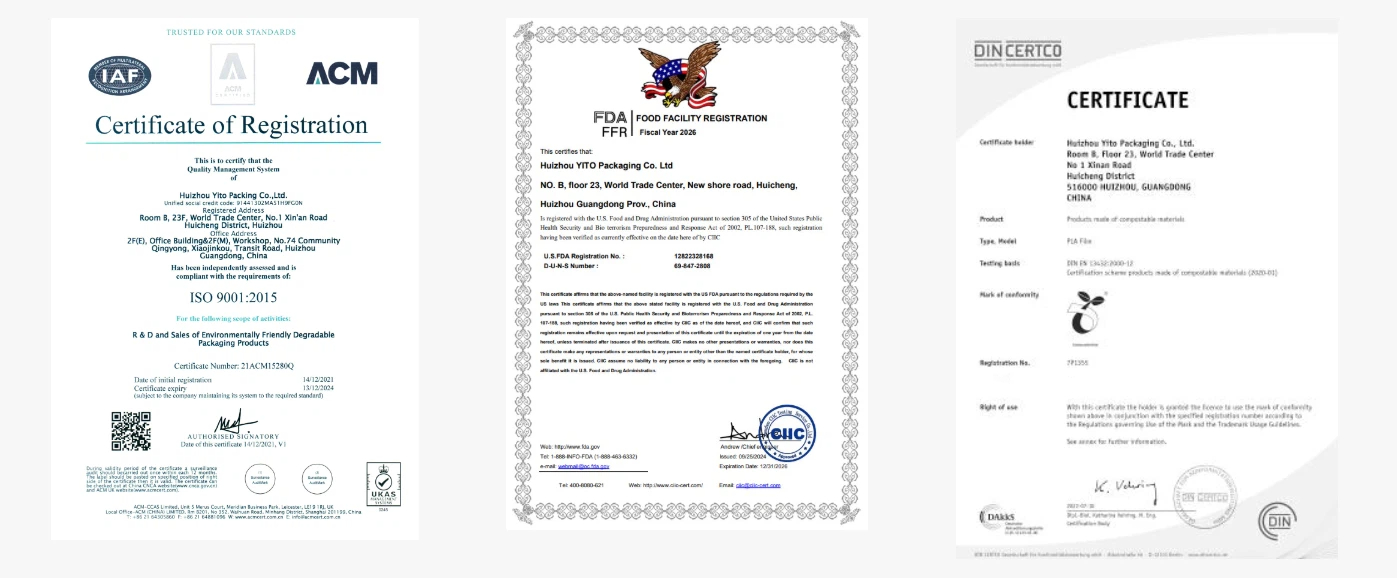
At YITO, we are a one-stop packaging supplier for global B2B buyers. Our main products include T-shaped cellophane flower sleeves, designed for fast top-loading packaging and widely used in supermarket and wholesale flower markets. We cover the full process from material selection and coating optimization to custom sizing, printing, and bulk production, helping customers simplify sourcing and improve efficiency. By integrating packaging development and supply in one place, we reduce common issues such as creasing, yellowing, and performance mismatch. Our materials meet FDA, LFGB, EN13432, ASTM D6400, and ISO 9001 standards, ensuring reliable quality for international markets.
Choose Cellophane Film Supplier: How to Choose the Right Cellophane Film
From a packaging supplier’s perspective, there is no one-size-fits-all solution.
Fresh flowers → need breathable packaging
Artificial flowers → need dust protection and structure
Retail packaging → needs strong visual appeal
E-commerce → requires durability and protection
The best solution is usually a combination of material selection + packaging design + supply capability
If you are looking for custom cellophane film for fresh or artificial flower packaging, working with an experienced cellophane film manufacturer can help you optimize both performance and cost.
At YITO, we support global B2B buyers with scalable and customized cellophane packaging solutions:
Flexible MOQ options for both small and bulk orders
Stable supply capacity for long-term packaging projects
Custom sizes, thickness, coating structures, and printing
Experience in export markets across the EU, US, and Asia
Our materials are certified to meet international standards, including FDA, LFGB, EN13432, ASTM D6400, and ISO 9001, ensuring compliance for global distribution.
We don’t just supply materials—we help optimize packaging performance, cost, and sustainability for real commercial use.
Our biodegradable packaging films are manufactured in compliance with international standards, including:
FDA-compliant materials for food-contact packaging
LFGB certification for EU market requirements
EN13432 / ASTM D6400 standards for compostable materials
ISO 9001 certified quality management system
These certifications ensure product safety, consistent quality, and suitability for global packaging applications.
Contact us to request samples and find the right solution for your flower packaging needs.
Conclusion: Why Cellophane Is a Smart Choice for Flower Packaging
The value of sustainable cellulose film in flower packaging
Widely applicable: Cellophane film is still one of the most commonly used materials for packaging fresh and artificial flowers.
Help brands achieve a balance in three aspects:
Visual Display—Make the bouquet present a clear and eye-catching appearance
Functional protection - providing the necessary protective performance for actual packaging
Sustainable positioning—conveying the concept of environmentally friendly and biodegradable materials
With growing demand for eco-friendly packaging and stricter regulations in the EU and US, biodegradable materials like cellophane are becoming a preferred choice for flower packaging.
For buyers sourcing wholesale cellophane film for flowers, the key is not whether to use cellophane but how to choose the right type and coating for your application.
Working with a reliable cellophane flower sleeves supplier or manufacturer ensures consistent quality, customization options, and stable bulk supply.
Whether for fresh flowers, artificial arrangements, or e-commerce packaging, the right film can improve product presentation, protection, and overall brand value.
FAQ
Here are the most common questions buyers ask about cellophane film for artificial flower packaging:
Q: What is biodegradable cellophane film made of?
Biodegradable cellophane film is made from regenerated cellulose derived from wood pulp or plant fibers.
Q: Is cellophane film biodegradable and compostable?
Yes, cellophane is biodegradable and compostable under proper conditions.
Q: Why is cellophane suitable for artificial flower packaging?
Cellophane provides high transparency, flexibility, and protection, making it ideal for displaying artificial flowers.
Q: Does cellophane protect artificial flowers from dust and moisture?
Yes, coated cellophane offers resistance to moisture, oils, and contaminants, helping protect products during storage and transport.
Q: What is the difference between coated and uncoated cellophane?
Uncoated cellophane is breathable, while coated cellophane provides better moisture and gas barrier performance.
Q: Can cellophane film be heat-sealed?
Yes, coated cellophane films can be heat-sealed, making them suitable for automated packaging processes.
Q: Is cellophane film printable for branding?
Yes, cellophane supports screen and offset printing, allowing custom logos and designs for retail packaging.
Q: How long does cellophane take to degrade?
Uncoated cellophane can degrade within 10–30 days, while coated versions may take longer depending on coating type.
Q: Is cellophane better than plastic for flower packaging?
Cellophane is more eco-friendly than plastic because it is plant-based and biodegradable.
Q: Can cellophane be used for gift and retail flower packaging?
Yes, it is widely used for bouquet wrapping, gift packaging, and decorative retail displays.
Q: What is the typical MOQ for custom cellophane film?
MOQ usually starts from 3,000—10,000 pcs depending on size, coating, and printing requirements.
Q: How long is the production lead time?
Sample time is typically 3-14 days, and mass production takes around 3–4 weeks.
Q: Can cellophane film be customized in thickness and size?
Yes, thickness, width, length, and printing can all be customized based on packaging needs.
Q: How do I choose between coated and uncoated cellophane?
Uncoated is breathable for fresh flowers, while coated film provides better moisture resistance for transport and retail display.
Request free samples to test clarity, flexibility, and sealing performance in your real packaging conditions.
Or contact our team to get a customized solution based on your flower type, packaging format, and market requirements.
Related Products


Post time: Apr-13-2026