
Stickers can be a great way to represent ourselves, our favorite brands, or places we’ve been.
But if you’re someone who collects a lot of stickers, there are two questions you need to ask yourself.
The first question is: “Wherever will I put this?”
After all, we all have commitment issues when it comes to deciding where to stick our stickers.
But the second, and perhaps more important question is: “Are stickers eco-friendly?”
1. What Are Stickers Made Of?
Although stickers seem simple, they are engineered materials designed to achieve print quality, adhesion, and durability. Understanding the structure is the foundation of determining whether a sticker is eco-friendly.
A typical sticker is composed of three layers:
1.1 Face Stock (Printing Surface)
This is the top layer that displays text, artwork, logos, and branding. It determines the sticker’s aesthetics, clarity, and physical performance.
Traditional Face Stock Materials
-
PVC (vinyl) – durable but harmful to the environment
-
PP / PE plastic film – affordable but petroleum-based
-
Paper – renewable, but often coated with plastic for durability
These options are widely used but not aligned with growing sustainability requirements.
⭐ Eco-Friendly Face Stock Materials
Modern sustainable packaging relies heavily on biodegradable or compostable films such as PLA film and cellulose film.
PLA Film (Polylactic Acid Film)
PLA film is produced from renewable resources such as sugarcane and corn starch. It offers:
-
Excellent transparency and surface smoothness
-
Strong stiffness suitable for premium printing
-
Industrial compostability
-
A plant-based alternative to plastic film
Applications include:
✔ lens label stickers
✔ food packaging labels
✔ transparent brand stickers
✔ compostable product labels
PLA film is ideal for brands transitioning to sustainable packaging systems.
Cellulose Film
Cellulose film is made from natural wood pulp, often sourced from FSC-certified forests. It is one of the most naturally biodegradable materials in the label industry.
Benefits include:
-
Home and industrial compostability
-
No microplastic residue
-
High clarity and breathability
-
100% biobased origin
Applications include:
✔ organic food labels
✔ biodegradable product labels
✔ cigarette filter film labels
✔ transparent premium labels
Both PLA film and cellulose film give brands an environmentally friendly path without sacrificing performance.
1.2 Adhesive Layer (The Glue That Sticks)
This is the middle layer enabling the sticker to bond to surfaces.
Traditional adhesives include:
-
Solvent-based acrylics
-
Rubber-based adhesives
These provide strong adhesion but release VOCs and may interfere with recycling.
⭐ Eco-Friendly Adhesives: Water-Based Systems
Water-based adhesives reduce environmental impact significantly.
Advantages:
-
Low VOC emissions
-
Compatible with PLA film and cellulose film
-
Suitable for compostable sticker systems
Without eco-friendly adhesives, even a biodegradable face stock cannot achieve a fully sustainable label.
1.3 Release Liner (Backing Layer)
The release liner protects the adhesive until the sticker is applied.
Common materials:
-
Silicone-coated kraft paper
-
Glassine paper
-
PET liners
These liners frequently end up as industrial waste.
⭐ Eco-Friendly Release Liners
Sustainable options include:
-
Recyclable kraft paper liners
-
Paper-based compostable liners
-
Recycled PET (rPET) liners
When paired with PLA or cellulose face stock and water-based adhesive, they create fully compostable sticker solutions.
2. How Are Stickers Made?
Essentially, the plastic or paper material is made into flat sheets.
The sheets can be white, colored, or clear, depending on the material type and purpose of the sticker. They can be different thicknesses as well.
Sticker production involves:
-
Material extrusion or paper pulping
-
Coating (for waterproofing, gloss, or metallic effects)
-
Adhesive application
-
Printing (digital, flexo, UV inkjet, etc.)
-
Die-cutting to shape
-
Release liner application
Most environmental impact comes from:
-
Plastic resin production
-
Chemical coatings
-
Petroleum-based adhesives
-
Release liners made from silicone-coated paper
3. Are Stickers Eco Friendly?
Most stickers are not eco-friendly simply because of the materials used to make them.
It has very little to do with how the stickers themselves are made.
Most stickers are made from some type of plastic, some of which are better than others.
Most stickers are not eco-friendly.
The reasons include:
-
Made from plastics (PVC, PP, PET)
-
Use adhesives that contaminate recycling streams
-
Have coatings that reduce biodegradability
-
Contain release liners that are rarely recyclable
Even stickers made from paper often include:
-
Plastic laminations
-
Water-resistant coatings
-
Synthetic adhesives
This makes conventional stickers a single-use, non-recyclable, non-biodegradable product.
4. What Makes a Sticker Eco-Friendly?
Since the process of making stickers is mostly mechanical, the main factor in determining whether or not a sticker is eco-friendly is the materials that it is made of.
According to industry standards (including peers like Inkreadible, GreenLabels, and Myerton Packaging), a truly eco-friendly sticker should meet several criteria:
✔ 1. Made from plant-based or natural materials
Such as:
-
Cellulose film
-
PLA (polylactic acid)
-
Sugarcane fiber paper
-
Uncoated kraft paper
✔ 2. Free from plastic laminations
Plastic coatings prevent decomposition.
✔ 3. Uses compostable or biodegradable adhesive
This is a major difference compared with traditional stickers.
✔ 4. Produced with low-impact printing inks
Soy-based or water-based inks are preferred.
✔ 5. Certified by environmental organizations
This part is missing from most traditional guides but highlighted by peers.
Common certifications include:
-
EN13432 (EU compostability)
-
ASTM D6400 (US compostability)
-
OK Compost Home
-
OK Compost Industrial
-
FSC® certification (paper from responsible forestry)
YITO’s PLA and cellulose label films can meet several of these certifications depending on the specific product.
5. Are Stickers Recyclable?
Despite being made from types of plastic that are capable of being recycled, stickers usually can’t be recycled due to having adhesive on them.
Adhesives of any kind can cause the recycling machines to gum up and become sticky. This can cause the machines to tear up, especially if large quantities of stickers are recycled.
But another reason that stickers usually can’t be recycled is that some of them have a coating on them to make them more water- or chemical-resistant.
As with adhesives, this coating makes stickers difficult to recycle because it would need to be separated from the sticker. This is difficult and expensive to do.
6. Are Stickers Sustainable?
As long as they are made from plastic materials and can’t be recycled, stickers are not sustainable.
Most stickers can’t be reused either, so they are a one-time-use product which isn’t sustainable either.
7. Are Stickers Toxic?
Stickers can be toxic depending on what type of plastic they are made of.
For example, vinyl is said to be the most hazardous plastic for our health.
It is known to have high concentrations of volatile organic compounds and phthalates which can cause cancer.
Although harmful chemicals are used to make all types of plastics, other types of plastic aren’t toxic as long as they are used as intended.
However, there have been concerns about toxic chemicals found in sticker adhesives, particularly in stickers that are used on food packaging.
The concern is that these chemicals seep from the sticker, through the packaging, and into the food.
But research has shown that the overall chance of this happening is low.
8. Are Stickers Bad for Your Skin?
Some people put stickers on their skin (particularly the face) for decorative purposes.
Some stickers are designed to be put on your skin for cosmetic purposes, such as reducing the size of pimples.
Stickers used for cosmetic purposes are tested to ensure that they are safe on the skin.
However, regular stickers that you use to decorative your skin may or may not be safe.
The adhesives used for stickers can irritate your skin, especially if you have sensitive skin or allergies.
9. Are Stickers Biodegradable?
Stickers that are made from plastic are not biodegradable.
Plastic takes a long time to decompose – if it decomposes at all – so it is not considered to be biodegradable.
Stickers that are made from paper will biodegrade, but sometimes the paper is coated with plastic to make it more water-resistant.
If this is the case, the paper material will biodegrade, but the plastic film will remain behind.
10. Are Stickers Compostable?
Since composting is essentially human-controlled biodegradation, stickers are not compostable if they are made from plastic.
If you throw a sticker into your compost, it will not decompose.
11. Limitations of Eco-Friendly Stickers (Industry Insight)
From competitor pages, there are several limitations worth explaining:
1. Not all eco-friendly stickers are waterproof
PLA and cellulose films hold up well, but uncoated papers do not.
2. Compostability requires specific conditions
A sticker labeled “compostable” will not break down:
-
In landfill
-
Under low moisture
-
In a dry indoor environment
3. Printing compatibility varies
Some eco films require:
-
Low-temperature printing
-
Special inks
-
Controlled processing environments
4. Adhesives matter as much as the material
A compostable sticker using non-compostable glue → not compostable.
12. Where Can Eco-Friendly Stickers Be Used?
Eco-friendly stickers are becoming popular across industries:
✔ Food packaging
Especially fresh produce, bakery boxes, and compostable containers.
✔ Cosmetics & personal care
Brands seeking sustainable branding.
✔ Clothing & textiles
Biodegradable hangtag labels.
✔ E-commerce & shipping
Compostable mailers paired with compostable labels.
✔ Retail & branding
Eco-conscious companies wanting to reduce plastic waste.
YITO’s PLA and cellulose label films can be customized for:
-
Transparent lens labels
-
Fruit packages
-
Glass bottles
-
Boxes and paper bags
-
Sustainable retail products
-
Eco-friendly cosmetic brands
13. How to Dispose of Eco-Friendly Stickers Correctly
A highly valuable section provided by peers:
If compostable:
Dispose in:
-
Home compost (if certified)
-
Industrial compost bin
If biodegradable but not compostable:
Dispose in:
-
General waste
(They will break down naturally without harming the environment.)
If conventional plastic sticker:
Dispose in:
-
General waste
Never in recycling.
14. YITO PACK’s Eco-Friendly Sticker Solutions
As global demand for sustainable labeling grows, YITO PACK provides fully compostable and biodegradable label films designed for modern eco-conscious brands.
✔ PLA Biodegradable Label Film
-
Made from plant-based corn starch
-
Industrially compostable
-
Excellent clarity
-
Printable surface
-
Suitable for food, cosmetic & retail packaging
-
Available in transparent, matte, or white
✔ Cellulose Compostable Label Film
-
100% cellulose
-
Home compostable
-
High transparency and softness
-
Ideal for premium labels
-
Excellent oxygen & moisture barrier
-
Naturally anti-static, no plastic feel
✔ Compostable Adhesive Options
Formulated to meet:
-
EN13432
-
ASTM D6400
-
OK Compost Industrial/Home
✔ Printing Compatibility
YITO compostable label films support:
-
Flexographic printing
-
UV inkjet
-
Water-based inks
-
Low-temperature printing
✔ Customization
-
Thickness: customizable
-
Width: customizable
-
Roll form or sheet form
-
OEM & ODM available
And as mentioned above, paper stickers may decompose but any plastic film or material will be left behind and therefore ruin your compost.
Related Products
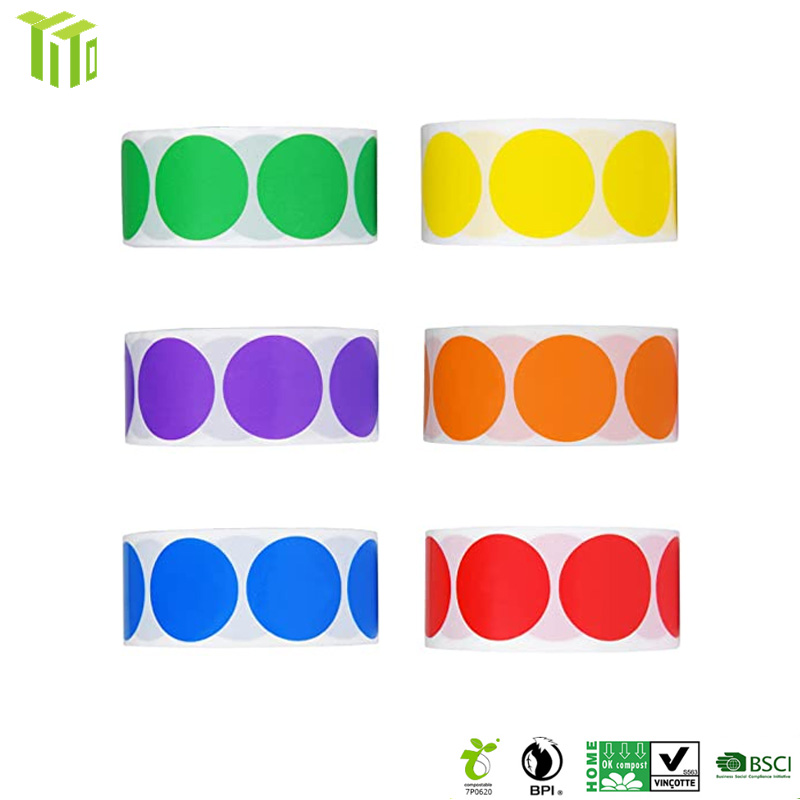
YITO Packaging is the leading provider of compostable cellulose films. We offer a complete one-stop compostable film solution for sustainable business.
Post time: Apr-18-2023