
A supermarket wants less plastic in the produce aisle. An organic retailer wants packaging that matches its sustainability promise. A farm also needs one practical answer: if the bag changes, will the produce still stay fresh during storage, delivery and display? Traditional plastic produce bags are often low-cost, but they are becoming less suitable for modern fresh produce packaging programs. Many conventional bags are difficult to recycle, create negative environmental impact, and may not support the sustainability goals of premium fruit brands or organic retail channels.
That is why the question “Are produce bags compostable?” is not just about material. A bag may be called biodegradable, plant-based, eco-friendly or compostable, but these words do not always mean the same thing.
At YiToPack, we see produce bags as part of a complete fresh produce packaging system, where compostability should work together with food-contact safety, moisture control, ventilation, strength, printing and shelf presentation.
Key points to check:
- · Is the bag truly compostable, or only described as biodegradable?
- · Does the documentation match the actual bag structure?
- · Is it industrial compostable or home compostable?
- · Can it protect freshness during storage and display?
- · Has it been tested with real produce, not only empty bags?
Why PPWR Should Be on Your Radar

For produce packaging sold into the EU, compostability is only one part of a broader packaging discussion. The EU Packaging and Packaging Waste Regulation, known as PPWR, entered into force on 11 February 2025 and will generally apply from 12 August 2026. It pushes packaging decisions toward lower waste, clearer responsibility and more consistent end-of-life communication.
For fresh produce projects, this means your packaging review may look beyond whether the bag is compostable. Buyers may also need to consider whether the packaging format is necessary, whether the material claim is supported, whether disposal information is clear, and whether the structure fits the expected waste route.
The practical point is simple: if your produce will enter EU supermarket or organic retail channels, prepare material information, compostability support and product structure details early. This can prevent the packaging review from slowing down the project later.
Why Fresh Produce Brands Are Switching to Compostable Produce Bags
Traditional plastic produce bags are often low-cost, but they can create problems for modern produce programmes:
· Difficult to recycle in many local systems
· Less suitable for sustainability-focused retail channels
· Increasing compliance and packaging review pressure
· Poor match with premium, organic or eco-friendly fruit packaging lines
Compostable produce bags offer a more sustainable alternative for fresh produce packaging, but the bags still need to perform in real use. A good produce bag should help balance freshness protection, breathability, moisture control, product visibility, food-contact safety and shelf presentation.
Compostable vs Biodegradable Produce Bags
|
Produce Bag Type |
Compostability Status |
Main Buying Point |
| Conventional PE produces bags | Usually not compostable | Low cost, but plastic-reduction pressure remains |
| Biodegradable produce bags | Not always compostable | Need clear proof, not only broad wording |
| Certified compostable produce bags | Can be compostable | Check standard, disposal route and final structure |
| Paper-based produce bags | Depends on the full structure | Coating, glue and window film matter |
| Cellulose-based produce bags | Depends on specification | Check sealability, documents and food-contact use |
| Custom printed produce bags | Depends on final design | Ink, thickness and additives should be reviewed |

Biodegradable and compostable are not the same thing. A biodegradable produce bag may break down over time under certain conditions, but the claim is broad. It does not clearly tell buyers how long the breakdown takes, what environment is required, or whether the material can safely enter a composting system. A compostable produce bag is more specific. It should be designed to break down under defined composting conditions and should be supported by a recognised standard, certification or test reference, such as EN 13432, ASTM D6400, BPI, TÜV OK compost INDUSTRIAL or TÜV OK compost HOME. For B2B buyers, this difference matters because supermarkets, organic retailers and export customers usually need clear proof, not just words like “green,” “plant-based,” “degradable” or “eco-friendly.” Before ordering, buyers should confirm whether the compostable claim applies to the finished bag, including material, thickness, printing, ink, coating, sealing and perforation, and whether the bag is industrial compostable or home compostable.
YiTo Pack supports custom compostable produce bag projects based on your product, market and branding needs, including custom size, thickness, printing, perforation, sealing style, coating options and roll or flat pack formats. For branded produce bags, we can also support logo printing, product information, barcode area, QR code, compostable messaging and retail-ready artwork while helping buyers review the material, finished bag structure, ink, printing and food-contact requirements together so the final bag works for real packing, storage, transport and retail display.
Compostability Must Work With Freshness, Structure and Handling
A compostable produce bag still has to do the basic job of fresh produce packaging: protect the product. Fresh fruits and vegetables do not stop changing after harvest. They lose water, respire, soften, bruise and react to temperature changes during storage, transport and retail display.
Your can choose perforation, micro-perforation, moisture-control design, anti-fog options, suitable thickness and proper sealing style according to the produce type. For berries, leafy greens, mushrooms, citrus, bananas or fresh-cut vegetables, the bag structure should be adjusted to balance ventilation, moisture and protection so the produce stays fresh and presentable during packing, transport and retail display.
At YiToPack, we evaluate fresh produce packaging through both sustainability and preservation performance. In one YiToPack fresh produce packaging test reference, optimised preservation packaging helped blueberries reach up to 52 days of freshness, with an overall defect rate of 2.87% and weight loss of 0.92%. In the comparison group without preservation packaging, the defect rate was 13.69% and weight loss was 8.43%. Another 4°C blueberry storage comparison showed 2.02% weight loss after 35 days with optimised preservation bag packaging, compared with 26.45% in original packaging.
Based on your project needs, YiToPack can develop fresh-keeping produce bag structures with moisture balance, controlled ventilation, tear resistance, customised sizing and printing support. For refrigerated storage, e-commerce fresh delivery, supermarket small-pack produce or organic retail display, this structure-based approach helps buyers choose a bag that is not only compostable but also suitable for real produce handling from packing to shelf.

What to Check Before a Wholesale Order
Before a wholesale order, do not judge compostable produce bags by empty samples only. The bag should be tested with real produce, because supermarkets, farms and organic retailers notice different problems in actual use.
Supermarkets usually care about documents, stable supply, shelf appearance, barcode area and daily handling. Farms care more about whether the bag opens easily, holds the produce, resists tearing and keeps vegetables fresh during storage or delivery. Organic retailers need the packaging to feel credible, with clear compostable claims and a clean look that matches fresh, natural produce.
A simple test can show a lot. Pack the produce as usual, store it under the expected temperature, move it through a short delivery or handling process, and then check for condensation, tearing, deformation, unclear printing, odor changes and weight loss.
The goal is to find structure, freshness and handling problems before mass production, when changes become expensive.
Buyer Check Flow Before Ordering
Before ordering compostable produce bags, buyers can review the project in this order:
Claim Check → Standard Check → Structure Check → Food-Contact Check → Produce Test → Wholesale Order
How YiToPack Supports Produce Bag Projects
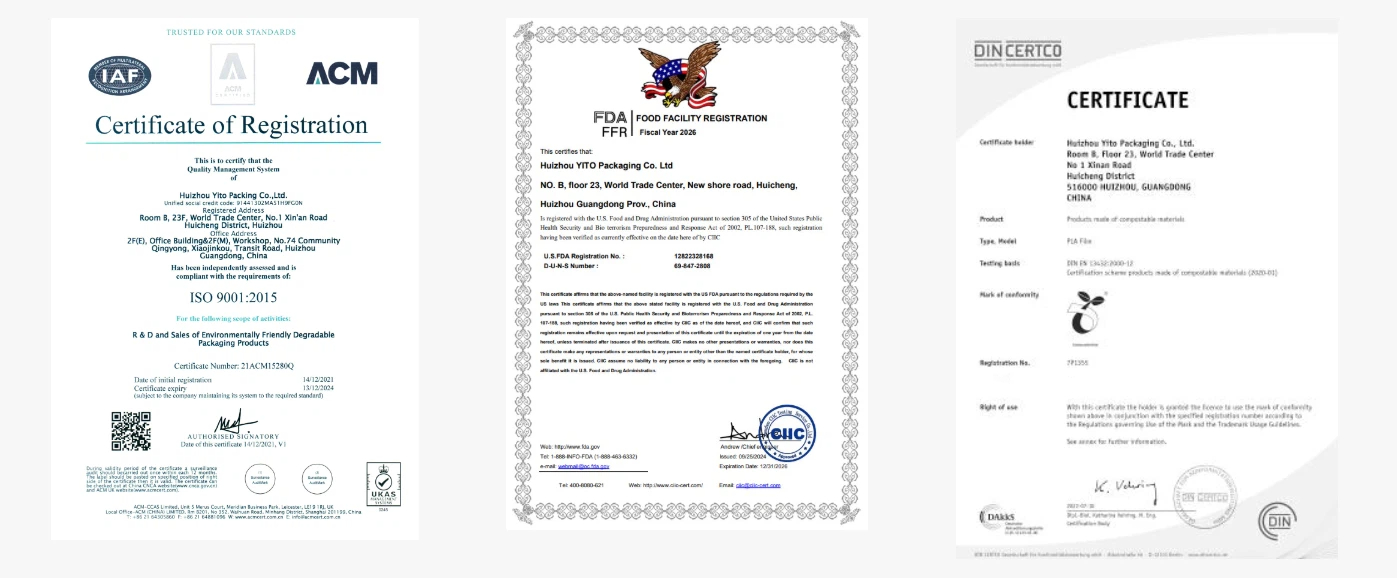
YiToPack provides compostable and eco-friendly produce packaging solutions for supermarkets, farms, organic retailers, produce packers and packaging wholesalers. With 10+ years of packaging experience and service support for 50+ companies, we help buyers review materials, structures, certifications and sample performance before bulk production.
For organic retailers and sustainability-focused brands, plant-based packaging bags can support a greener brand image. Depending on your project and market requirements, we can support documentation related to EN 13432, ASTM D6400, OK Compost, FDA, EU 10/2011, LFGB, FSC/PEFC and ISO 9001. YiToPack also offers one-stop support for produce bags, labels, tray liners, freshness film, clamshells, punnets, fruit boxes and cartons.
Our one-stop approach is helpful when your packaging needs to work across sourcing, branding, storage, transport and retail display. Instead of reviewing each packaging item separately, your team can align the bag, label, liner and outer packaging from the beginning.
Conclusion
Produce bags can be compostable, but the answer depends on the material, standard, finished structure, disposal route and real produce performance.
For supermarket buyers, the bag must support review and daily store use. For farms, it must work during packing, storage and delivery. For organic retailers, it must make the sustainability message feel credible while keeping produce fresh and presentable.
A good compostable produce bag should not be approved by wording alone. It should be checked through documents, sample testing and real application.
YiToPack can help you compare compostable produce bag options, review freshness requirements and build a produce packaging solution that works from sample approval to bulk supply.
FAQ
Q: Are all produce bags compostable?
A: No. Many produce bags are made from conventional plastic or only described as biodegradable. A compostable produce bag should have clear material information and relevant certification support.
Q: Is biodegradable the same as compostable?
A: No. Biodegradable is a broader claim. Compostable means the bag is designed to break down under defined composting conditions, usually supported by standards such as EN 13432, ASTM D6400, BPI or TÜV OK compost.
Q: Should I choose industrial compostable or home compostable produce bags?
A: It depends on your target market and disposal route. Industrial compostable bags need controlled composting facilities, while home compostable bags require different certification support.
Q: What should I test before a wholesale order?
A: Test the bag with real produce. Check moisture, condensation, tearing, printing clarity, weight loss and shelf appearance before moving into bulk production.
Related Compostable Produce Bags Guides
What Are Compostable Produce Bags Made Of? PLA, PBAT, and Starch Explained
California SB 1053: What Grocery Stores Need to Know About Compostable Produce Bags
Compostable vs Biodegradable Produce Bags: Which Certification Actually Matters?
Request free samples to test ventilation, stacking strength, clarity, and label adhesion in real cold-chain conditions.
Related Products


Post time: Jul-09-2026